




Choosing the right ac placement in living room is not just about aesthetics—it directly affects cooling performance, comfort, and energy efficiency. In hot climates like the UAE, correct placement can improve airflow, reduce electricity consumption, and prevent uneven cooling or discomfort.
Table of Contents
ToggleIdeal AC Installation Height and Clearance Requirements
The position of your indoor AC unit plays a major role in how effectively cool air circulates throughout the room. One of the most important factors is installation height.
Recommended Installation Height
- Mount the indoor unit at 2.1 to 2.4 meters from the floor
- This allows cool air to spread evenly before descending
- Avoid placing the unit too low, as airflow becomes limited
Minimum Clearance Requirements
- Top clearance (ceiling): at least 15 cm
- Side clearance: 10–15 cm on both sides
- Front clearance: completely open airflow area
These clearances allow the AC to “breathe” properly. Without enough space, airflow becomes restricted, reducing efficiency and increasing strain on the system.
Correct Airflow Direction for Maximum Comfort
Many people assume stronger airflow means better cooling, but direction matters more than strength.
The goal is to create indirect airflow, not direct cold air hitting people.
Best Airflow Strategy
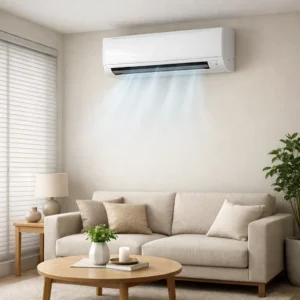
- Angle airflow slightly upward or across the room
- Let cool air circulate naturally before reaching seating areas
- Avoid direct airflow toward sofas or dining chairs
Direct airflow can cause discomfort such as dry eyes, headaches, or muscle stiffness. Proper direction improves comfort without sacrificing cooling.
Best Wall Placement Based on Living Room Layout
Room layout plays a critical role in AC placement. One of the most effective strategies is choosing the correct wall.
Use the Longer Wall for Better Coverage
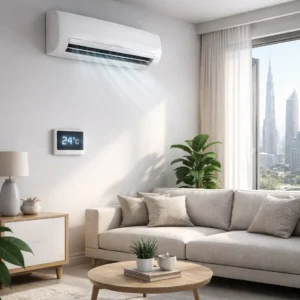
In rectangular living rooms, placing the AC on the longer wall allows air to travel further and distribute more evenly.
This improves:
- Cooling coverage across the entire room
- Air circulation efficiency
- Reduction of hot spots
Central Position vs Corner Placement
- Central wall placement gives balanced airflow
- Corner placement can create uneven cooling zones
Choosing the right wall often improves performance more than increasing AC capacity.
Avoiding Dead Zones in the Living Room
Dead zones are areas where cool air does not reach effectively. These are common in poorly planned layouts.
Common Causes of Dead Zones
- Large sofas blocking airflow
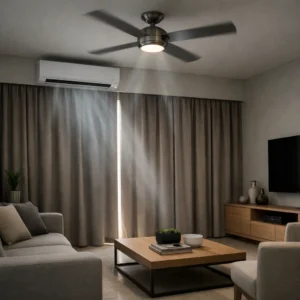
- Heavy curtains near vents
- Partitions or shelves interrupting air movement
When airflow is blocked, cool air gets trapped and does not circulate properly.
How to Prevent Dead Zones
- Keep airflow path clear between AC and open space
- Avoid placing large furniture directly in front of the unit
- Adjust airflow direction to bypass obstacles
Even small layout adjustments can significantly improve cooling distribution.
Placement Considerations in Hot UAE Climate
In the UAE, external heat sources greatly influence indoor cooling performance. AC placement should account for these factors.
Avoid West-Facing Hot Walls
Walls exposed to direct afternoon sun absorb heat and transfer it indoors. Installing an AC on these walls forces the unit to work harder.
Stay Away from Sun-Exposed Windows
- Large windows increase heat gain
- Placing AC near windows reduces cooling efficiency
If unavoidable, use curtains or blinds to reduce heat load.
Consider Heat Load Zones
Place the AC where it can counteract the hottest areas of the room, not just where it looks visually balanced.
Common AC Placement Mistakes to Avoid
1. Mounting Above Electronics
Electronics generate heat. Placing AC directly above TVs or devices can create uneven temperature zones.
2. Installing Near Kitchen Heat Sources
If your living room is connected to an open kitchen, avoid placing AC near cooking areas.
3. Blocking Airflow with Furniture
Furniture placed directly under or in front of the AC disrupts airflow and reduces cooling efficiency.
4. Placing Too Close to Ceiling
Without proper clearance, airflow becomes restricted and the system cannot function optimally.
Basic Piping and Drainage Requirements
Proper installation is not just about position—it also involves piping and drainage.
Refrigerant Pipe Length
- Shorter pipe length improves efficiency
- Excessively long piping reduces cooling performance
Drainage Slope
- Drain pipe must have a downward slope
- Prevents water backflow and leakage
Pipe Insulation
Proper insulation prevents energy loss and condensation issues.
Incorrect installation can lead to water leaks, reduced efficiency, and long-term damage.
Placement Strategies for Better Energy Efficiency
Correct AC placement can reduce energy consumption significantly.
1. Avoid Heat Sources
Keep AC away from sunlight, electronics, and heat-generating areas.
2. Optimize Airflow Path
Ensure cool air can travel freely across the room without obstruction.
3. Use Balanced Positioning
A central position reduces uneven cooling, preventing overuse of the system.
4. Combine with Proper Maintenance
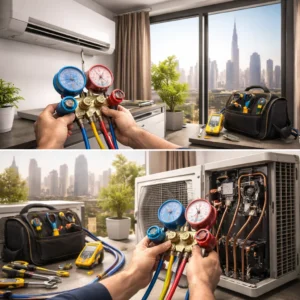
Even perfect placement requires regular servicing to maintain performance. A structured AC maintenance approach helps keep airflow and efficiency stable over time.
How Placement Affects Electricity Consumption
Incorrect placement forces the AC to work harder, increasing energy usage.
Common inefficiencies include:
- Airflow blockage
- Heat exposure from walls or windows
- Uneven cooling requiring longer run time
Correct placement reduces system load, leading to:
- Lower electricity bills
- Reduced wear and tear
- More consistent cooling
Real-Life Placement Example
Consider a rectangular living room with a sofa on one side and windows on the opposite wall.
Best placement strategy:
- Install AC on the longer wall
- Avoid window-facing wall
- Angle airflow across open space
- Keep sofa out of direct airflow path
This setup ensures balanced cooling without discomfort.
When Placement Needs Professional Evaluation
Some layouts require expert planning, especially:
- Large villas with multiple zones
- Open-plan living rooms
- Rooms with high ceilings
In these cases, airflow design becomes more complex and requires technical assessment.
Long-Term Impact of Correct AC Placement
Proper AC placement is not just a one-time decision—it affects long-term performance.
- Improves system lifespan
- Maintains consistent indoor temperature
- Reduces maintenance frequency
- Enhances indoor air quality
Incorrect placement, on the other hand, leads to ongoing inefficiencies and discomfort.
If your current AC setup results in uneven cooling, excessive energy use, or discomfort, it may not be a system issue—but a placement issue. Poor positioning can reduce airflow efficiency, create hot zones, and increase strain on your AC. Over time, this can lead to higher electricity costs and faster system wear. Addressing placement early helps prevent these problems and ensures better performance. If you need clarity about your setup or want to optimize your system, you can use the WhatsApp or Call button on the top right to connect with the Bio On Air team and explore the most suitable solution for your space.
Conclusion
The right ac placement in living room improves airflow, comfort, and energy efficiency. By considering height, airflow direction, room layout, and environmental factors, you can achieve balanced cooling while reducing costs and maintaining long-term AC performance.