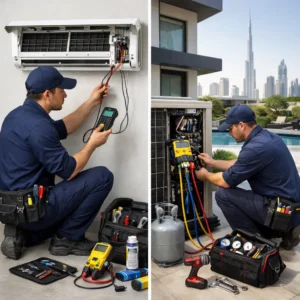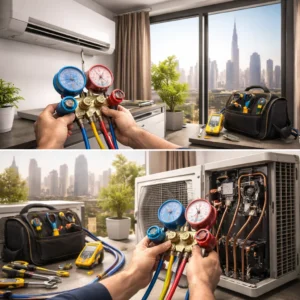





ac maintenance how to is one of the most searched topics by homeowners and tenants who want their AC to work reliably without unexpected breakdowns or high electricity bills. In hot climates like the UAE, AC maintenance is not only about keeping the room cool, but also about protecting indoor air quality, system lifespan, and daily comfort. This guide gives you a clear, practical, and non-technical walkthrough of what you can safely do yourself, what warning signs to watch for, and when it is smarter to stop DIY and involve professional help.
Table of Contents
Toggle#1 Start with the Biggest DIY Win: Air Filter Maintenance
If there is one AC maintenance task that delivers the biggest benefit with the least effort, it is air filter maintenance. Dirty filters are one of the most common reasons for poor cooling, weak airflow, bad smells, and high energy consumption.
Why air filter maintenance matters
Your AC filter traps dust, sand, fibers, and airborne particles before air circulates back into the room. When the filter becomes clogged, airflow is restricted. This forces the AC to work harder, reduces cooling efficiency, and increases electricity usage. Over time, it can also cause the evaporator coil to freeze or the blower motor to wear out faster.
How to check your air filter
- Turn off the AC completely
- Open the indoor unit front panel
- Remove the filter gently
- Hold it up to light—if light barely passes through, it needs cleaning or replacement
Cleaning vs replacement frequency by usage type
| Usage Type | Cleaning Frequency | Replacement Recommendation |
|---|---|---|
| Light use (few hours daily) | Every 4–6 weeks | Every 6–12 months |
| Normal home use | Every 2–4 weeks | Every 6–9 months |
| Heavy use or pets | Every 1–2 weeks | Every 3–6 months |
Clean reusable filters with water only. Avoid harsh detergents. Let them dry completely before reinstalling.
#2 Indoor Unit Maintenance Checklist (Step-by-Step)
Once the filter is clean, move to the rest of the indoor unit. This checklist focuses on safe, homeowner-friendly tasks.
Step 1: Check airflow strength
Turn the AC on and feel the airflow from the vents. Weak airflow often indicates filter blockage, dirty coils, or blower issues.
Step 2: Inspect for unusual smells
Musty or sour smells usually point to moisture buildup or microbial growth inside the unit. While light odor can sometimes improve after filter cleaning, persistent smells often require deeper cleaning.
Step 3: Inspect the drain line
The drain line removes condensation. If it becomes clogged, water can leak indoors.
- Look for dripping water below the unit
- Check the drain outlet for blockage
- Light flushing with warm water can help for minor clogs
If water leakage continues, stop DIY. Internal drain pan or slope issues require professional handling.
#3 Outdoor Unit Maintenance: What You Can and Cannot Do
The outdoor condenser unit plays a major role in releasing heat. Poor outdoor maintenance directly affects cooling performance.
Safe DIY steps
- Turn off power before inspection
- Remove visible debris around the unit
- Ensure at least 60 cm clearance for airflow
- Check for bent fins
Fin alignment (basic care)
If fins are slightly bent, a soft fin comb can help straighten them. Do not use hard tools or force, as fins are fragile.
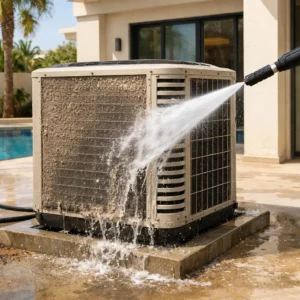
Condenser surface cleaning
Light dust can be rinsed gently with low-pressure water. Do not use pressure washers or chemicals. High pressure can push dirt deeper and damage fins.
#4 Thermostat Accuracy Check (Often Overlooked)
Many cooling complaints are caused by thermostat issues rather than the AC system itself.
Quick thermostat checks
- Confirm temperature setting matches comfort level
- Check if the thermostat reacts when temperature changes
- Replace batteries if applicable
An inaccurate thermostat can cause short cycling, uneven cooling, or constant running.
#5 Common Warning Signs and What They Usually Mean
Understanding early warning signs helps you stop DIY before damage spreads.
Ice buildup on indoor unit
Usually caused by restricted airflow, dirty filters, or low refrigerant. Stop using the AC and do not attempt to scrape ice.
Reduced airflow
Often linked to clogged filters, dirty coils, or blower issues. Start with filter cleaning, but stop if airflow does not improve.
Water leakage
Indicates drain blockage, improper slope, or frozen coils. Minor clogs may be DIY-fixable, persistent leaks are not.
Unusual noises
Rattling, buzzing, or grinding sounds can signal loose parts, motor issues, or fan imbalance. Continued operation may cause further damage.
#6 Safety Redlines: What Homeowners Must Not Do
This is one of the most important sections of ac maintenance how to. Knowing when to stop protects your system and your safety.
Never handle refrigerant
- Do not attempt gas refill
- Do not open refrigerant lines
- Do not rely on “gas top-up” without leak testing
Avoid electrical component handling
- Do not open control boards
- Do not bypass safety switches
- Do not test live wiring
Do not use harsh cleaning methods
- No pressure washing indoor units
- No chemical sprays inside coils
- No sharp tools near fins
Crossing these redlines often leads to higher repair costs and safety risks.
#7 Seasonal Maintenance Checklist (Simple and Practical)
Before peak summer
- Clean or replace filters
- Check drain line
- Clear outdoor unit area
- Test cooling performance
Mid-season check
- Inspect airflow consistency
- Listen for new noises
- Monitor electricity usage changes
After heavy usage
- Deep filter cleaning
- Visual indoor unit inspection
- Schedule professional inspection if performance dropped
#8 DIY vs Professional Maintenance: Cost and Risk Comparison
DIY maintenance is valuable—but only within limits.
| Aspect | DIY | Professional Service |
|---|---|---|
| Cost | Low upfront | Moderate but controlled |
| Risk | Higher if misdiagnosed | Lower with proper tools |
| Depth of cleaning | Surface level | Internal components |
| Long-term protection | Limited | High |
Professional AC maintenance typically costs less than repeated repairs caused by delayed or incorrect DIY handling.
#9 When to Stop DIY and Call an Expert
Stop DIY maintenance and seek professional help if:
- Cooling does not improve after filter cleaning
- Ice forms on coils
- Water leakage persists
- Noises become louder or frequent
- Electricity bills spike suddenly
These signs indicate deeper issues that require trained inspection.
Conclusion
Understanding ac maintenance how to gives you control over your comfort, energy use, and indoor air quality. Simple DIY steps like air filter care, basic inspections, and seasonal checks can prevent many common problems. However, knowing where to stop is just as important as knowing what to do.
AC systems are complex, and crossing safety redlines can turn small issues into expensive repairs. The best approach is balanced: use DIY maintenance for routine care, stay alert to warning signs, and involve professional service when problems go beyond surface-level fixes. In a climate where AC is essential, this approach keeps your system reliable, your air healthier, and your long-term costs predictable.