




People usually search for ac maintenance how often when they feel unsure about timing—whether their AC is being serviced too rarely, too often, or not in the right way. In hot climates like the UAE, this question matters more than most homeowners realize, because AC systems run longer, work harder, and directly affect indoor comfort, air quality, and energy use. This guide explains how often AC maintenance should really be done, how to adjust the schedule based on real-life conditions, how to tell if you are already overdue, and which tasks are safe to handle yourself versus those that should always be left to professionals.
Table of Contents
ToggleWhy the Question “AC Maintenance How Often” Is So Important
AC maintenance is often misunderstood as something you do only when the system breaks down. In reality, maintenance is about prevention. Skipping or delaying maintenance may not cause immediate failure, but it slowly reduces efficiency, strains components, and allows small issues to grow unnoticed.
When people ask ac maintenance how often, they are usually trying to balance three concerns:
- avoiding unnecessary costs,
- preventing sudden breakdowns during peak heat,
- protecting long-term system lifespan.
Understanding the right maintenance frequency helps you make informed decisions instead of reacting to problems under pressure.
Baseline Recommendation: How Often AC Maintenance Should Be Done
As a general baseline, most AC systems benefit from two levels of maintenance:
- Routine homeowner checks: performed regularly throughout the year.
- Professional servicing: performed at least once a year, and often twice in hot climates.
In the UAE, where AC systems may run almost year-round, annual professional maintenance is usually the minimum, not the ideal maximum. Many households and businesses schedule professional servicing before peak summer and sometimes again after heavy-use seasons.
This baseline exists because even well-installed systems accumulate dust, experience wear, and lose efficiency over time. Without inspection and cleaning, small performance losses compound into higher energy use and greater risk of failure.
Annual Professional Servicing: What It Covers and Why It Matters
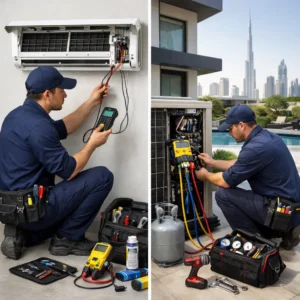
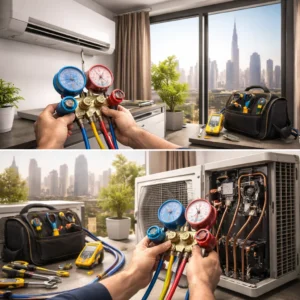
Professional AC maintenance goes beyond basic cleaning. It focuses on system health, safety, and performance. During a professional visit, technicians typically inspect and service components that homeowners should not attempt to handle.
Professional servicing commonly includes:
- checking electrical connections and controls,
- inspecting coils and heat-exchange surfaces,
- checking refrigerant performance and signs of leakage,
- testing airflow and system response,
- verifying drainage and moisture control.
Skipping this type of maintenance often leads to hidden issues. For example, a partially blocked coil may still cool, but it forces the system to run longer, increasing energy consumption and stressing the compressor.
Structured services such as AC maintenance and AMC are designed to cover these checks consistently, especially for systems exposed to heavy usage.
Routine Homeowner Checks: How Often and What to Watch
Routine checks do not replace professional maintenance, but they play a crucial role in keeping the system stable between service visits.
Homeowners should generally perform basic checks every one to three months, depending on usage. These checks are simple, safe, and focused on early detection.
Common routine tasks include:
- checking and cleaning or replacing air filters,
- listening for new or unusual noises,
- noticing changes in airflow strength,
- checking for water leakage around indoor units.
These observations help you spot changes early, which is often the difference between a small adjustment and a costly repair.
Adjusting AC Maintenance Frequency Based on Real-Life Conditions
The question ac maintenance how often does not have one fixed answer for everyone. Maintenance frequency should adapt to how the system is used and the environment it operates in.
Usage Intensity
Systems that run many hours per day accumulate wear faster. A unit cooling a busy household or a commercial space needs more frequent checks than one used occasionally.
If your AC runs most of the day, professional maintenance once per year may not be enough. More frequent inspections help keep performance stable.
Climate and Environment
Hot, dusty, or humid environments accelerate contamination and component stress. In desert climates, dust buildup inside filters, coils, and ducts happens quickly.
In such conditions, airflow and cleanliness should be monitored more closely, and services like AC deep cleaning may be recommended periodically to restore efficiency.
Occupancy Level
More people in a space means more heat, humidity, and airborne particles. Homes with high occupancy or frequent visitors place additional load on AC systems.
Higher occupancy often justifies shorter intervals between maintenance visits.
Pets
Pets introduce fur, dander, and additional dust into the air. Filters clog faster, and internal components become contaminated more quickly.
Homes with pets usually benefit from more frequent filter checks and professional inspection.
System Age
Older systems require closer monitoring. As components age, efficiency drops and tolerances become tighter.
While maintenance cannot stop aging, it can slow deterioration and reduce the risk of sudden failure.
Self-Check Section: Are You Already Overdue for AC Maintenance?
Many people do not realize they are overdue until a major problem appears. Use the following signs as a self-check.
You may be overdue for AC maintenance if you notice:
- electricity bills rising without changes in usage habits,
- unusual noises such as rattling, buzzing, or clicking,
- persistent odors when the AC starts,
- uneven cooling between rooms,
- frequent on-and-off cycling.
These symptoms often indicate reduced efficiency, airflow problems, or component stress. Addressing them early through inspection can prevent more serious damage.
DIY Tasks vs Professional-Only Work: Setting Safe Expectations
Understanding what you can safely do yourself helps build trust and avoids unnecessary risk.
DIY-Friendly Tasks
Homeowners can safely handle tasks such as:
- cleaning or replacing air filters,
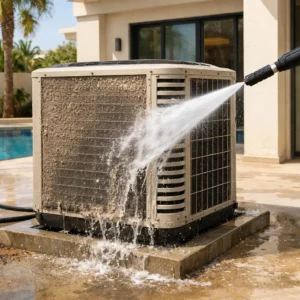
- keeping outdoor units free of obstructions,
- monitoring system behavior and reporting changes.
These actions support system performance but do not replace technical servicing.
Professional-Only Tasks
Tasks that should always be handled by trained technicians include:
- electrical inspection and repairs,
- refrigerant handling and testing,
- coil and internal component cleaning,
- diagnosing airflow and pressure issues.
Attempting these without training often leads to misdiagnosis, damage, or safety risks.
Cost Versus Savings: Why Maintenance Usually Pays for Itself
People often hesitate to schedule maintenance because they focus on immediate cost rather than long-term value.
Regular maintenance helps:
- reduce energy consumption by maintaining efficiency,
- avoid emergency repairs during peak seasons,
- extend system lifespan.
While exact costs depend on system condition and service scope, preventive maintenance generally costs far less than major repairs or early replacement. Pricing is always discussed at the time of booking so expectations remain clear.
Warranty and Compliance Implications of Skipped Maintenance
Many AC manufacturers require documented maintenance to keep warranties valid. Skipping professional servicing may lead to denied warranty claims if a major component fails.
From a compliance perspective, regular maintenance also helps ensure systems operate safely and within recommended parameters, especially in commercial or shared residential buildings.
Seasonal Timing: When to Schedule AC Maintenance
Timing matters. Scheduling maintenance before peak summer ensures the system is prepared for heavy use.
Some households also schedule a follow-up check after extended high-load periods to catch early wear.
Seasonal planning reduces emergency calls and helps spread maintenance evenly throughout the year.
Planning Tools: Reminders and Maintenance Alignment
To stay consistent, many homeowners use simple planning tools such as:
- calendar reminders every six or twelve months,
- usage-based reminders for filter checks,
- service plans aligned with occupancy and climate.
Aligning maintenance schedules with how your home actually uses AC is more effective than following a generic timeline.
When AC Maintenance Needs Professional Attention
AC issues rarely resolve on their own. Delaying maintenance can lead to reduced air quality, higher energy use, and permanent system damage. Bio On Air helps manage these risks through structured inspection, clear communication, and safe servicing practices. Acting early is a preventive decision that protects comfort and system reliability. If you want to discuss your current AC condition or plan a suitable maintenance schedule, you can use the WhatsApp or Call button at the top right of this page to speak with our team.
Conclusion
The question ac maintenance how often does not have a one-size-fits-all answer. While annual professional servicing is a solid baseline, real-life factors such as usage intensity, climate, occupancy, pets, and system age should guide your final schedule.
Routine homeowner checks help catch early warning signs, while professional maintenance addresses deeper system health. Together, they reduce uncertainty, control energy costs, and protect long-term performance. In climates where AC is essential, consistent maintenance is not just about avoiding breakdowns—it is about preserving comfort, air quality, and peace of mind year after year.