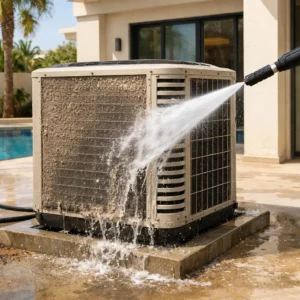





Searching for ac maintenance charges usually means you are trying to answer a very practical question: how much should AC maintenance cost, what do you actually get for that charge, and how do you know if it is worth paying for. In the UAE, where air conditioning runs for long hours almost every day, maintenance is not optional. The real concern for most people is avoiding unclear pricing, unnecessary services, and repeat costs that feel higher than expected over time.
Table of Contents
ToggleUnderstanding AC Maintenance Charges at a Glance
AC maintenance charges are not a single fixed number. They vary depending on service scope, system type, urgency, and condition of the unit. What matters most is understanding the structure behind the charge rather than focusing only on the amount.
In general terms, AC maintenance charges are usually grouped into service tiers such as:
- Basic maintenance: usually includes essential cleaning, visual inspection, and basic performance checks.
- Standard or regular maintenance: includes deeper inspection, cleaning of key components, airflow checks, and minor adjustments.
- Seasonal or comprehensive maintenance: focuses on preparing the system for heavy use, improving efficiency, and identifying early-stage issues.
- Emergency or call-out maintenance: applies when service is needed urgently or outside normal hours.
Instead of asking for an exact price immediately, it is often more useful to ask what level of maintenance is included and whether the charge reflects a one-time visit or ongoing care.
A Quick Price Snapshot Without the Confusion
When people look for ac maintenance charges, they often encounter wildly different figures. This usually happens because services are not being compared on equal terms.
A clearer way to think about pricing is by asking the provider to tell the price range for each service level rather than quoting a single figure. A transparent provider should be able to explain:
- The typical charge range for basic maintenance
- How charges increase for more detailed or seasonal maintenance
- Whether emergency or after-hours call-outs are priced differently
Maintenance charges usually increase as service scope expands. For example, a basic visit focused on cleaning and inspection costs less than a visit that includes deeper system checks, coil cleaning, or performance optimization. Emergency visits also tend to carry additional call-out fees due to urgency and scheduling impact.
What matters most is clarity. You should understand what level of care you are paying for and why the charge exists, rather than comparing numbers without context.
What AC Maintenance Charges Should Actually Include
A major pain point for customers is paying for “maintenance” without knowing what was actually done. Transparent AC maintenance charges should always be linked to a clear checklist.
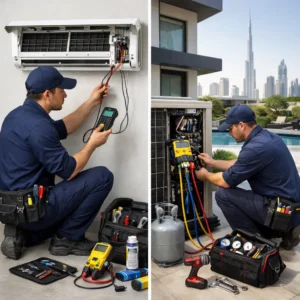
A proper maintenance visit typically includes a combination of the following tasks:
- Filter cleaning or replacement: to restore airflow and reduce system strain.
- Coil inspection and surface cleaning: to support efficient heat exchange.
- Drain line check: to prevent water leakage and moisture buildup.
- Airflow assessment: to ensure air is distributed evenly.
- Basic electrical and safety checks: to confirm stable operation.
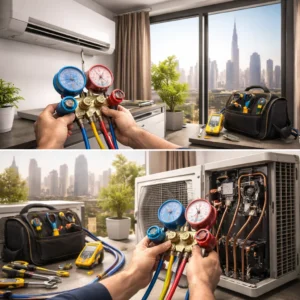
- Performance testing: to verify cooling output and system response.
If a maintenance charge does not clearly cover these areas, it may not deliver real value. Maintenance should improve reliability and efficiency, not just provide a quick visual check.
For a more structured approach to ongoing care, many customers choose professional AC maintenance and AMC services, which outline what is included across scheduled visits rather than one-off tasks.
Key Factors That Increase AC Maintenance Charges
Another common frustration is seeing maintenance charges rise unexpectedly. In most cases, this is not random. Certain factors naturally increase the time, effort, and resources required.
Understanding these factors helps you anticipate costs and avoid surprises:
- Type of AC system: central systems, ducted units, and multi-split systems require more time than single wall-mounted units.
- System age: older units often need more careful inspection and adjustment.
- Refrigerant type: newer refrigerants may require specific handling and testing.
- Accessibility: units located in tight spaces, ceilings, or rooftops take longer to service.
- Urgency: same-day or after-hours visits usually include call-out charges.
These factors do not automatically mean overcharging. They reflect real differences in labor and risk. The key is whether the provider explains them clearly before work begins.
Routine Maintenance vs Repair or Replacement
One of the most important decisions tied to ac maintenance charges is knowing when maintenance makes sense and when it does not.
Routine maintenance is usually worth paying for when:
- The AC is cooling but efficiency has dropped
- Airflow feels weaker than usual
- The system has not been serviced for a long time
- You want to prevent breakdowns before peak summer
Maintenance may not be enough when:
- The AC repeatedly fails despite regular servicing
- Major components are worn or damaged
- Energy consumption keeps increasing with no improvement
In these cases, repair or even replacement may be more cost-effective than continued maintenance. Understanding professional AC repair or AC installation and replacement options helps you avoid spending on maintenance that no longer delivers value.
Emergency and Call-Out Fees Explained Simply
Emergency maintenance charges often raise concerns. The key question is why they exist.
Emergency or call-out fees usually apply when:
- Service is required outside normal working hours
- The issue needs immediate attention to prevent damage
- Technicians must be dispatched urgently
These charges are not about penalizing customers. They reflect scheduling disruption and availability of skilled technicians at short notice. The best approach is to ask for clarity upfront: whether a visit is considered routine or emergency, and how that affects the charge.
DIY Maintenance vs Professional Maintenance Scope
Many people search for ac maintenance charges because they want to reduce costs. DIY actions can help, but only within safe limits.
Homeowners can usually handle:
- Regular filter cleaning or replacement
- Keeping vents and returns clear
- Ensuring outdoor units are not blocked
These steps reduce strain on the system and can lower future maintenance charges.
However, certain tasks should always be handled by professionals:
- Electrical inspections and adjustments
- Refrigerant checks or handling
- Internal coil cleaning beyond surface dust
- Performance testing and system balancing
Attempting these tasks without training can cause damage, safety risks, or higher repair costs later. From a total cost of ownership perspective, proper professional maintenance often saves money over time by preventing major failures.
Total Cost of Ownership and Long-Term Savings
Looking only at individual ac maintenance charges can be misleading. A better approach is to consider total cost of ownership.
Regular maintenance helps:
- Reduce energy consumption
- Extend system lifespan
- Lower the risk of emergency repairs
- Maintain consistent indoor comfort
Skipping maintenance may feel like saving money in the short term, but it often leads to higher repair charges, unexpected downtime, and reduced efficiency. Over several years, planned maintenance usually costs less than reactive repairs.
When AC Maintenance Should Not Be Delayed
Maintenance issues rarely fix themselves. Delaying care can lead to:
- Declining air quality and potential health discomfort
- Increased electricity bills due to inefficient operation
- Accelerated wear on components
- Higher repair or replacement costs later
Bio On Air supports customers by explaining maintenance needs clearly, outlining service scope before work begins, and helping you decide whether maintenance, repair, or replacement makes the most sense. Acting early is a preventive decision that often reduces long-term cost.
Conclusion
Understanding ac maintenance charges is not about memorizing numbers. It is about knowing what you are paying for, why the charge exists, and how it fits into the long-term health of your AC system. Transparent pricing, clear service scope, and informed decisions help you avoid unnecessary spending and repeated stress.
By focusing on routine maintenance when it adds value, recognizing when repair or replacement is more appropriate, and combining safe DIY habits with professional care, you can control costs while maintaining reliable cooling. In a climate where AC performance directly affects daily life, informed maintenance choices protect comfort, efficiency, and long-term reliability.