




AC leak water is one of the most common and stressful AC problems, especially in hot and humid climates like the UAE. Water dripping from the indoor unit, pooling on the floor, or staining ceilings is not just a mess—it is a warning sign. This article explains what to do immediately to stop water damage, the most common causes behind AC water leaks, how to identify the likely issue through simple visual signs, which problems you can safely handle yourself, when professional HVAC service is necessary, the risks of ignoring the leak, and how to prevent AC water leaks in the future.
Table of Contents
ToggleImmediate Actions to Stop Water Damage
When you notice an AC leak water issue, your first priority should be preventing further damage. Even a small drip can cause serious problems if left unchecked.
Step 1 Turn Off the AC System
Switch the AC off immediately using the thermostat. This stops further condensation from forming and prevents additional water from leaking. Continuing to run the AC while it is leaking can worsen internal damage and increase the amount of water released.
Step 2 Cut Power If Water Is Near Electrical Areas
If water is dripping close to electrical outlets, switches, or extension cords, turn off the AC circuit breaker. Water and electricity are a dangerous combination, and safety should come first.
Step 3 Clear Standing Water
Use towels, a mop, or a wet vacuum to remove any standing water on the floor. This helps prevent floor damage, mold growth, and slipping hazards.
Step 4 Protect Surrounding Areas
Move furniture, rugs, and electronics away from the leaking area. Place a bucket or container under the drip point to catch remaining water while you assess the situation.
These steps do not fix the root cause, but they buy you time and limit damage while you identify why the AC is leaking water.
Why AC Leak Water Happens
Understanding why an AC leaks water helps you decide whether it is a simple maintenance issue or a sign of a more serious problem. Most AC water leaks are related to condensation not draining properly.
Clogged Condensate Drain Line
The most common cause of AC leak water is a clogged condensate drain line. As your AC cools the air, moisture is removed and collected as condensation. This water is supposed to flow through a drain pipe and exit the building.
Over time, the drain line can become blocked by:
- Dust and debris
- Algae or mold growth
- Sludge buildup in humid environments
When the drain line is clogged, water backs up and overflows from the drain pan, leading to visible leaks.
Frozen Evaporator Coils
Another frequent cause of AC water leaks is frozen evaporator coils. When airflow is restricted or refrigerant levels are low, the coils can freeze.
When the AC is turned off or the ice melts, the excess water may overwhelm the drain system, causing leaks.
Common reasons coils freeze include:
- Dirty or clogged air filters
- Blocked air vents
- Low refrigerant due to leaks
Damaged or Rusted Drain Pan
The drain pan sits beneath the evaporator coil and collects condensation. Over time, especially in older systems, the pan can rust, crack, or develop holes.
When this happens, water leaks directly from the pan instead of flowing into the drain line. This issue is common in systems that have not been inspected or maintained regularly.
Disconnected or Improperly Installed Drain Pipe
If the drain pipe becomes disconnected, loose, or poorly installed, condensation water may spill inside instead of draining outside.
This can happen after:
- Recent AC installation or replacement
- Maintenance work where the pipe was disturbed
- Vibration over time loosening fittings
Simple Visual Signs to Help Identify the Cause
You do not need technical tools to spot some early clues. Simple observation can often narrow down the likely cause of an AC water leak.
Water dripping only when AC is running
This often points to a clogged drain line or frozen coil issue.
Water stains or rust near the indoor unit
This may indicate a damaged or corroded drain pan.
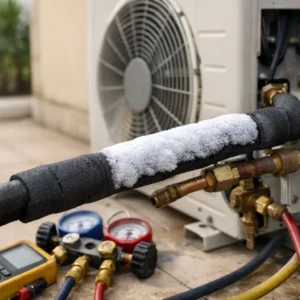
Ice buildup on copper pipes or coils
This is a strong sign of frozen evaporator coils caused by airflow or refrigerant problems.
Gurgling sounds near the AC
This can suggest water struggling to move through a partially blocked drain line.
What You Can Safely Fix Yourself
Some AC leak water issues are safe for basic DIY action, as long as you stay within clear limits.
Cleaning or Replacing Air Filters
Dirty filters restrict airflow and contribute to frozen coils. Removing and cleaning or replacing the filter is one of the safest and most effective DIY steps.
Checking the Drain Line Exit
If you can access the outdoor end of the drain line, check for visible blockage. Sometimes algae or dirt buildup is visible and can be gently cleared.
Clearing Minor Standing Water
Drying the area and monitoring whether water returns after restarting the AC can help confirm whether the issue is ongoing.
These steps are preventive and diagnostic. They should not involve opening sealed components or handling refrigerant.
When Professional HVAC Service Is Required
Many AC water leak issues require professional handling. Continuing DIY attempts beyond basic steps can worsen the problem.
You should call a professional if:
- The drain line is deeply clogged and water keeps backing up
- Evaporator coils are frozen repeatedly
- The drain pan is cracked or rusted
- Water leaks continue despite filter replacement
- You suspect refrigerant issues
Professional AC repair ensures proper inspection, safe handling of components, and long-term resolution rather than temporary relief. A structured AC repair service approach typically includes drain inspection, airflow assessment, and component checks.
Risks of Ignoring an AC Leak Water Problem
Ignoring an AC water leak can lead to more than just inconvenience.
Structural Damage
Water can damage walls, ceilings, flooring, and insulation. Over time, this leads to costly repairs beyond the AC itself.
Mold and Bacteria Growth
Moist environments are ideal for mold and bacteria. This affects indoor air quality and can trigger allergies or respiratory issues.
Electrical Hazards
Water leaking near wiring or electrical components increases the risk of short circuits and system failure.
Higher Repair Costs
What starts as a simple clog can turn into major component damage if left unaddressed.
How Professionals Typically Fix AC Water Leaks
Professional HVAC technicians follow a structured process rather than guessing.
This often includes:
- Inspecting and flushing the condensate drain line
- Checking coil condition and airflow
- Testing refrigerant levels if freezing is present
- Repairing or replacing damaged drain pans
- Ensuring proper drain pipe slope and connection
In cases where dirt and microbial buildup contribute to the problem, AC deep cleaning or targeted AC duct cleaning may be recommended to restore proper drainage and airflow.
Basic Prevention Steps to Avoid Future AC Water Leaks
Prevention is often easier and cheaper than emergency repair.
Clean Filters Regularly
Clean or replace filters every one to three months, depending on usage and environment.
Schedule Periodic Inspections
Regular inspections help detect drain line buildup and airflow issues early. Structured AC maintenance and AMC services are designed to prevent problems before they become emergencies.
Keep Drain Lines Clear
Periodic flushing of the drain line helps prevent algae and sludge buildup.
Watch for Early Warning Signs
Small drips, unusual smells, or reduced cooling are early signs that should not be ignored.
When AC Water Leaks Should Be Addressed Properly
An AC leak water issue is not something to postpone. When ignored, it can lead to unhealthy indoor air, mold growth, higher electricity bills, electrical risks, and permanent system damage. Bio On Air helps address AC water leaks through careful inspection, safe repair methods, and clear explanations so you understand what caused the leak and how to prevent it from happening again. Acting early is a preventive step that protects both your property and your health. If you notice ongoing water leakage, you can use the WhatsApp or Call button at the top right of this page to discuss your AC condition with our team.
Conclusion
An AC leak water problem is a clear signal that something in your system is not working as it should. While immediate actions like turning off the AC and clearing water can reduce damage, they do not solve the root cause. Clogged drain lines, frozen coils, damaged drain pans, and disconnected pipes are the most common reasons behind AC water leaks.
Understanding the warning signs, knowing what you can safely check yourself, and recognizing when professional HVAC service is needed helps you avoid bigger damage and unnecessary costs. With regular maintenance, timely inspection, and proper repair, AC water leaks are largely preventable. Addressing the issue early keeps your indoor environment comfortable, healthy, and protected from long-term damage.