




An ac installation guide is often searched when people want to understand whether their AC installation will be done correctly, safely, and without hidden problems later. Poor installation can lead to weak cooling, high electricity bills, frequent breakdowns, and even legal or safety issues. This guide is written to help you understand the full installation journey—from planning and preparation to execution and long-term reliability—so you can make informed decisions, avoid costly mistakes, and know exactly when professional help is necessary.
Table of Contents
TogglePre-Installation Planning Why This Step Determines Everything
Many AC problems do not start after years of use. They start on installation day. Pre-installation planning is the most critical phase because it defines how efficiently the system will work, how long it will last, and how easy it will be to maintain.
Cooling Load Sizing Logic
One of the most common mistakes is choosing an AC size based on guesswork or room size alone. Cooling load sizing should consider multiple factors:
- Room size and ceiling height
- Number of windows and sun exposure
- Insulation quality
- Number of occupants
- Appliances that generate heat
An undersized unit will run continuously without reaching comfort, increasing wear and electricity usage. An oversized unit cools too quickly, cycles on and off frequently, and struggles with humidity control. Proper load sizing balances comfort, efficiency, and system lifespan.
System Compatibility Checks
Before installation, it is important to confirm compatibility between:
- Indoor unit and outdoor condenser
- Electrical supply capacity
- Existing ductwork or wall structure
- Control systems and thermostats
Incompatibility often leads to operational issues that appear months later, such as unstable performance or repeated error codes.
Permits and Legal Considerations
In many locations, AC installation is not purely a technical task. Permits may be required, especially for:
- Central AC systems
- Electrical upgrades
- Major system replacements
There are also legal limitations on refrigerant handling. Refrigerant must be handled by certified professionals using approved procedures. Ignoring these rules can result in safety risks and compliance issues.
Tools and Supplies Overview Setting Realistic Expectations
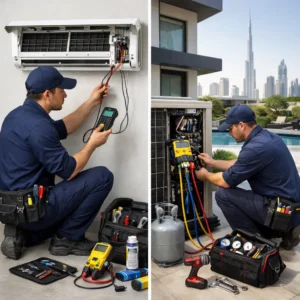
A practical ac installation guide should clearly separate essential tools from consumables. This helps you understand preparation needs without underestimating complexity.
Essential Tools
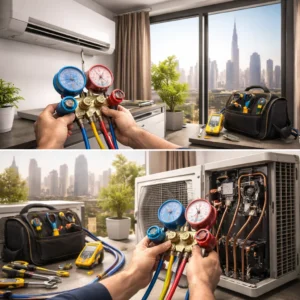
- Vacuum pump and manifold gauge set
- Torque wrenches for refrigerant connections
- Electrical testing tools
- Leveling and mounting equipment
These tools are required to ensure safety, correct pressure handling, and proper electrical connections.
Consumables
- Refrigerant piping and insulation
- Electrical cables and conduits
- Mounting brackets and fasteners
- Drain pipes and fittings
Consumables often influence total cost. Prices vary based on length, quality, and site conditions, so budgeting should always include allowances for these materials rather than assuming they are negligible.
Phased Installation Roadmap From Start to Finish
Breaking installation into phases helps avoid skipped steps and quality issues.
Phase 1 Unit Placement and Clearance
Correct placement of indoor and outdoor units is essential. Key considerations include:
- Sufficient airflow clearance
- Minimal vibration transfer
- Accessibility for future service
- Protection from direct environmental stress
Poor placement often leads to noise complaints, inefficient cooling, and maintenance difficulties.
Phase 2 Refrigerant Line Work
Refrigerant piping must be:
- Correctly sized
- Properly insulated
- Securely supported
Improper piping can cause energy loss, oil return problems, and long-term compressor damage.
Phase 3 Electrical and Low-Voltage Connections
This phase includes:
- Main power connections
- Grounding
- Control wiring between units
Incorrect electrical work is a major safety risk and a common cause of early system failure.
Phase 4 Evacuation and System Charging
Proper evacuation removes moisture and air from the system. Skipping or rushing this step can result in:
- Reduced cooling efficiency
- Corrosion inside components
- Shortened system life
This step alone is one of the strongest reasons professional installation is often necessary.
Critical Success Details Commonly Missed
Vibration Control
Without proper isolation, vibration transfers into walls and ceilings, causing noise and structural stress.
Condensate Drainage Design
Drain lines must have proper slope and routing. Poor drainage design leads to water leakage, mold risk, and ceiling damage.
Airflow Access and Balance
Airflow should not be blocked by furniture, walls, or poorly placed vents. Balanced airflow ensures even cooling and comfort.
Future Serviceability
An installation should allow technicians to access filters, coils, and electrical components without dismantling walls or ceilings.
Troubleshooting Red Flags After Installation
Even after installation, early warning signs should not be ignored:
- Unusual noise or vibration
- Inconsistent cooling
- Water leakage
- Frequent system cycling
These symptoms often indicate installation-related issues rather than normal operation.
When to Stop and Call a Professional
This ac installation guide would be incomplete without clear boundaries. You should stop and call a professional when:
- Refrigerant handling is required
- Electrical upgrades are needed
- Permits or inspections are involved
- System behavior is unsafe or unstable
Professional installation ensures compliance, safety, and warranty protection.
Central Air vs Ductless Systems High-Level Comparison
Understanding system type helps you follow the correct installation path.
Central Air Systems
- Uses ductwork
- Suitable for larger properties
- Higher installation complexity
Ductless Systems
- No ductwork required
- Flexible zoning
- Simpler installation in many cases
Each system type has different planning, installation, and maintenance requirements.
Hidden Cost Awareness What Affects the Budget
Many installation budgets fail because hidden factors are ignored:
- Permit and inspection requirements
- Electrical upgrades
- Material quality and routing complexity
- Site access challenges
A realistic budget always includes contingency for these variables rather than focusing only on the unit price.
Why Professional Installation Matters in the Long Term
Professional installation is not about convenience. It is about protecting efficiency, air quality, safety, and long-term cost. Poor installation often leads to higher energy use, frequent repairs, and reduced system life.
For a clear overview of professional installation standards and when replacement is more appropriate, you can refer to AC installation and replacement services for structured guidance.
When Proper Installation Should Not Be Delayed
Improper or rushed installation can affect indoor air quality, increase operating costs, and create safety risks. Bio On Air supports proper AC installation through careful planning, compliant procedures, and clear communication. Acting early helps prevent long-term problems that cost more to fix later. If you want to discuss your installation plan or understand the safest approach, you can use the WhatsApp or Call button at the top right of this page to speak with our team.
Conclusion
A complete ac installation guide is not about memorizing steps. It is about understanding why each step matters. From load sizing and system compatibility to evacuation, drainage, and future service access, installation quality defines how your AC will perform for years.
Whether you are installing a new system or replacing an old one, taking time to plan, recognize limits, and involve professionals at the right stage protects comfort, air quality, and long-term cost. In climates where AC is essential, correct installation is not an upgrade—it is a necessity.