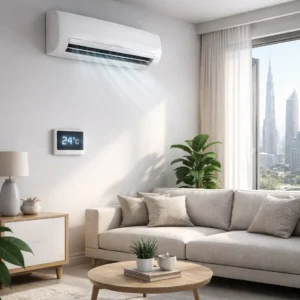





When your AC starts blowing warm air instead of cool air, it can quickly disrupt comfort, especially in a hot climate like the UAE. The problem of ac hot air blowing is one of the most frustrating issues for homeowners, tenants, and businesses because the system appears to be running, yet the cooling you depend on is simply not there. This situation often leads to confusion, wasted electricity, and rising stress, particularly when the cause is unclear. Below, we break down the most common reasons why an AC blows hot air and explain practical solutions for each, helping you understand what is happening and what steps can realistically fix the problem.
Table of Contents
Toggle#1 Thermostat Settings Are Incorrect
One of the simplest yet most commonly overlooked reasons for ac hot air blowing is incorrect thermostat settings. It may sound basic, but it happens more often than expected, especially after power outages, battery replacement, or accidental changes.
Here are a few thermostat-related issues to check:
- The thermostat is set to “heat” instead of “cool.”
- The fan is set to “on” rather than “auto,” causing warm air to circulate when the compressor is not running.
- The temperature setting is higher than the current room temperature.
How to solve it:
Set the thermostat to “cool,” lower the temperature setting, and switch the fan mode to “auto.” If the thermostat uses batteries, replacing them can also help prevent incorrect signals being sent to the AC system.
If the thermostat settings are correct but the AC continues blowing warm air, the issue likely lies deeper within the system.
#2 Dirty or Clogged Air Filters
Dirty air filters restrict airflow, making it difficult for your AC to cool air effectively. When airflow is severely limited, the system may still run, but it cannot exchange heat properly, resulting in warm or weak airflow.
Signs that dirty filters may be the cause include:
- Weak airflow from vents
- Dust buildup around vents
- The AC running longer than usual without cooling
How to solve it:
Clean or replace air filters regularly. In most homes, filters should be cleaned or replaced every few weeks during heavy use seasons. Clean filters restore airflow and help the system cool efficiently again.
If filters are clean and airflow remains weak, the problem may be deeper within the system.
#3 Low Refrigerant Level or Gas Leakage
Refrigerant is the substance that absorbs heat from indoor air and releases it outside. If the refrigerant level is low, the AC cannot remove enough heat, resulting in ac hot air blowing even though the system is running.
Low refrigerant usually means there is a leak, not that the gas was “used up.” Common signs include:
- Gradual loss of cooling over time
- Hissing or bubbling sounds
- Ice formation on the indoor or outdoor unit
How to solve it:
Refrigerant issues should always be handled by professionals. The correct solution is leak detection, sealing the leak, and then refilling refrigerant to the proper level. Simply topping up gas without fixing the leak often leads to repeat problems and higher long-term costs.
#4 Dirty or Blocked Condenser Coil
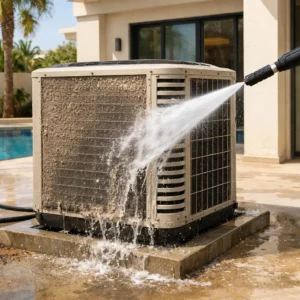
The condenser coil, located in the outdoor unit, releases heat absorbed from inside your space. If this coil is dirty or blocked by dust, sand, or debris, heat cannot be released efficiently.
When the condenser cannot release heat:
- The AC struggles to cool indoor air
- The system may overheat
- Warm air may blow from vents
How to solve it:
Ensure the outdoor unit is clean and free of obstructions. Professional coil cleaning may be required if dirt buildup is heavy. Regular outdoor unit maintenance is especially important in dusty environments.
#5 Faulty Compressor
The compressor is the heart of the AC system. It circulates refrigerant and enables heat transfer. If the compressor fails or works intermittently, cooling performance drops significantly, often leading to ac hot air blowing.
Symptoms of compressor problems include:
- The AC runs but does not cool
- Unusual noises from the outdoor unit
- Frequent system shutdowns
How to solve it:
Compressor issues require professional diagnosis. Depending on the severity, solutions may range from electrical repairs to compressor replacement. Early inspection can prevent complete system failure.
#6 Electrical or Capacitor Problems
Electrical components such as capacitors help start and run motors within the AC system. If a capacitor fails, parts of the system may not operate correctly, even though the AC appears to be on.
Electrical issues can cause:
- The outdoor unit not starting
- Fans running without cooling
- Inconsistent system operation
How to solve it:
Electrical repairs should be handled by trained technicians. Replacing faulty capacitors or repairing wiring can restore proper operation and cooling.
#7 Frozen Evaporator Coil
A frozen evaporator coil prevents proper heat absorption. Ice buildup is often caused by restricted airflow, dirty filters, or low refrigerant.
When the coil is frozen:
- Cooling efficiency drops
- Airflow becomes weak
- Warm air may blow intermittently
How to solve it:
Turn off the AC to allow the ice to melt, then address the underlying cause. Cleaning filters and checking refrigerant levels are common first steps. Persistent freezing requires professional inspection.
#8 Ductwork Issues or Air Leaks
In central AC systems, damaged or leaking ducts can cause cooled air to escape before reaching your rooms. As a result, you may feel warm air at the vents.
Duct-related problems include:
- Loose or disconnected ducts
- Air leaks in concealed duct runs
- Blocked or collapsed duct sections
How to solve it:
Professional duct inspection and sealing can restore airflow efficiency. Cleaning and repairing ducts helps ensure cooled air reaches the intended spaces.
#9 AC Unit Is Undersized or Overworked
If the AC system is too small for the space it serves, it may struggle to keep up with cooling demand, especially during peak heat. This can result in ac hot air blowing or uneven cooling.
Signs of an undersized or overworked AC include:
- Constant running without reaching set temperature
- Rooms cooling unevenly
- High electricity bills
How to solve it:
A professional assessment can determine whether the AC capacity matches your space. In some cases, system upgrades or adjustments are necessary for long-term comfort.
Why Ignoring AC Hot Air Blowing Can Make Things Worse
Many people delay action when their AC blows warm air, hoping the issue will resolve itself. Unfortunately, AC problems rarely improve on their own.
Ignoring the issue can lead to:
- Worsening indoor air quality
- Increased electricity consumption
- More severe component damage
- Higher repair or replacement costs
Early diagnosis is often the most cost-effective and least disruptive approach.
When Professional AC Repair Is the Better Choice
While simple checks like thermostat settings or filter cleaning can be done yourself, deeper issues such as refrigerant leaks, electrical faults, or compressor problems should be handled by professionals.
Professional AC repair ensures:
- Accurate diagnosis
- Safe handling of refrigerant and electrical components
- Long-term solutions instead of temporary fixes
Addressing the problem early helps protect both comfort and system lifespan.
Conclusion
The issue of ac hot air blowing can stem from simple setting errors or serious mechanical failures. Understanding the nine common reasons outlined above helps you identify possible causes and take informed action. From thermostat adjustments and filter cleaning to professional repair for refrigerant or compressor issues, each solution plays a role in restoring proper cooling.
Most importantly, do not ignore the warning signs. Warm air from your AC is a signal that something is not working as intended. Acting early reduces energy waste, prevents bigger damage, and helps maintain healthy indoor air. With the right approach and timely support, your AC system can return to providing reliable and efficient cooling when you need it most.