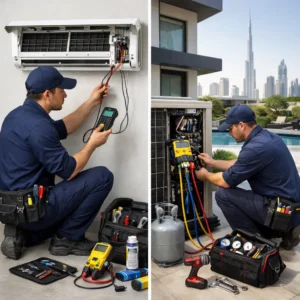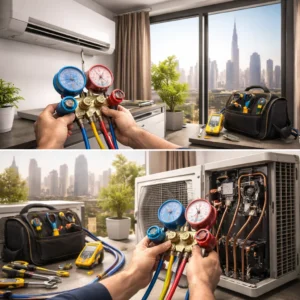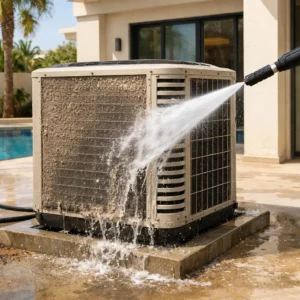





AC grill cleaning is often overlooked until you notice visible dust lines, yellowed plastic, sticky buildup, or weak airflow coming from your vents. In the UAE, where AC systems run for long hours, grills quickly collect fine dust, grease particles, and moisture residue. This affects not only appearance but also airflow efficiency and indoor air quality. The good news is that with the right methods, you can clean smarter, restore appearance, and prevent long-term damage without wasting time or risking paint and plastic surfaces.
Table of Contents
Toggle#1 Start with Quick No-Removal Dust Removal (When the Grill Is Lightly Soiled)
If your AC grill shows light surface dust but no heavy grease or discoloration, you can often clean it without removing it from the wall or ceiling. This method works best for routine maintenance between deeper cleaning sessions.
Tools you need:
- Microfiber cloth or electrostatic duster
- Soft paintbrush or detailing brush
- Low-suction vacuum with brush attachment
Work-smarter approach:
- Turn off the AC before cleaning.
- Use a vacuum with a brush head to gently remove loose dust.
- Use a soft brush to clean between tight slats where cloth cannot reach.
- Finish with a slightly damp microfiber cloth to remove remaining particles.
This quick method prevents dust from compacting and reduces the need for aggressive scrubbing later. Regular light cleaning also improves airflow by preventing partial blockage of the slats.
#2 Full Removal Deep Cleaning for Heavy Dust and Grease
When the grill shows thick dust accumulation, sticky buildup, or discoloration, removal is often necessary for proper cleaning.
Before removing:
- Switch off the AC completely.
- Place a cloth below the vent to catch falling debris.
- Take a photo of the grill position to ensure correct reinstallation.
Once removed, you can clean it thoroughly using warm water and mild detergent. Avoid harsh chemical cleaners that can damage paint or weaken plastic.
Deep cleaning steps:
- Rinse loose dust first to avoid mud-like smearing.
- Use a soft sponge or cloth, not abrasive pads.
- Clean between slats using a narrow brush.
- Rinse thoroughly and dry completely before reinstalling.
Never reinstall a damp grill, as moisture can contribute to mold growth behind the vent.
#3 Material Suitability: Can You Soak or Use a Dishwasher?
Not all AC grills are made from the same material. Understanding material type helps avoid accidental damage.
Common materials:
- Painted metal grills
- Powder-coated aluminum
- White plastic or PVC
Soaking:
Most metal and plastic grills can be soaked in warm water with mild detergent. However, avoid soaking for too long if the paint is chipped, as water may cause rust underneath.
Dishwasher use:
Dishwashers may be suitable only for sturdy plastic grills and only on low-heat settings. High heat can warp plastic or fade color. Metal grills are generally not recommended for dishwashers due to potential corrosion.
When in doubt, hand washing is safer and gives better control over delicate areas.
#4 Tackling Grease and Sticky Buildup Safely
In kitchens or areas near cooking spaces, AC grills often collect grease particles that mix with dust, creating sticky layers that are difficult to remove.
Safe household degreasers include:
- Warm water with dishwashing liquid
- Diluted white vinegar solution
- Baking soda paste for stubborn spots
Correct tools for tight slats:
- Old toothbrush
- Soft detailing brush
- Thin microfiber wrapped around a ruler edge
Never use steel wool or rough scrubbers. These scratch paint, remove protective coating, and create uneven surfaces where dust sticks even faster.
#5 Techniques That Prevent Paint Damage
Paint damage is one of the most common results of aggressive cleaning. Once paint chips or scratches, grills become more vulnerable to rust and discoloration.
To protect paint:
- Avoid strong bleach unless heavily diluted.
- Do not use abrasive cleaning powders.
- Pat dry instead of rubbing aggressively.
If minor paint damage occurs, touch-up paint designed for metal surfaces can restore appearance and prevent corrosion.
#6 Aesthetic Restoration Options
Sometimes cleaning alone does not restore the grill’s appearance. Yellowing, fading, or chipped surfaces may require additional steps.
Whitening Yellowed Plastic
Plastic grills may yellow over time due to UV exposure and heat. A mild hydrogen peroxide solution combined with indirect sunlight exposure can help brighten them. Always test a small area first.
Refreshing Faded or Chipped Surfaces
Light sanding followed by spray paint designed for metal or plastic can restore uniform color. Choose heat-resistant and non-toxic finishes.
Refinish or Replace?
If the grill is structurally intact and corrosion-free, refinishing is often practical. However, if rust is deep or plastic is brittle, replacement may offer better long-term durability. When evaluating cost, it is better to request an updated price from your service provider instead of relying on outdated numbers.
#7 Safety and Inspection Checks Behind the Grill
Cleaning the grill is also an opportunity to inspect what is behind it.
Look for:
- Soot marks that may indicate airflow imbalance or contamination.
- Visible duct leakage or gaps around edges.
- Excessive dust inside duct openings.
- Filter condition and alignment.
If you notice significant contamination or airflow restriction, the issue may go beyond surface cleaning. In such cases, professional AC duct cleaning may be necessary to restore system efficiency.
Cleaning vs Replacement Decision Guidance
Deciding between cleaning and replacing depends on several factors:
- Material durability (metal vs brittle plastic)
- Extent of rust or structural damage
- Time and labor effort required
- Long-term aesthetic expectations
If cleaning requires excessive repair effort and does not guarantee durability, replacement may be the smarter option. However, many grills can be restored effectively with proper methods.
Prevention Tips for Long-Term Efficiency
Preventing future dust buildup reduces maintenance time and improves airflow efficiency.
- Clean grills lightly every few weeks.
- Replace or clean filters regularly.
- Maintain balanced humidity indoors.
- Ensure proper airflow direction.
Improving system cleanliness also enhances overall performance. In some cases, full system care such as AC deep cleaning or structured AC maintenance may be beneficial for long-term efficiency.
When Professional Help May Be Necessary
If you notice recurring dust patterns, persistent odor, airflow restriction, or signs of duct leakage, surface cleaning alone may not solve the issue. Bio On Air can assess grill condition, airflow performance, and underlying system health. Ignoring deeper problems can reduce indoor air quality, increase energy use, and cause long-term system strain. Acting early protects your comfort and system durability. You can use the WhatsApp or Call button at the top right of this page to discuss your AC grill or airflow concerns with our team.
Conclusion
AC grill cleaning is more than cosmetic care. It improves airflow efficiency, protects indoor air quality, and extends the lifespan of your AC system. By using smarter cleaning techniques, selecting the right tools, inspecting behind the grill, and knowing when to restore or replace, you can maintain both appearance and performance effectively. Regular preventive care reduces future dust buildup and keeps your cooling system operating at its best.