




AC fitting is a term that often causes confusion because it is used in two different but closely related ways. Some people use it to describe the mechanical fittings that connect AC pipes and components, while others use it to refer to the full AC installation or fitting process when a new unit is installed. If this difference is not clearly understood, it can lead to wrong purchases, improper installation, refrigerant leaks, and repeated repair costs. This article explains both meanings clearly and then guides you step by step through fitting types, correct installation practices, leak prevention, troubleshooting, and cost considerations, so you can choose the right approach without confusion.
Table of Contents
ToggleUnderstanding the Dual Meaning of AC Fitting
Before going deeper, it is important to clearly separate the two common meanings of AC fitting.
The first meaning refers to mechanical AC fittings. These are the physical connectors used in an air conditioning system, such as flare fittings, compression fittings, O-rings, joints, and valves. Their main function is to connect copper pipes, ensure a sealed refrigerant path, and allow pressure to remain stable inside the system.
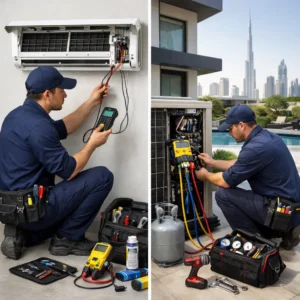
The second meaning refers to the AC fitting or installation process. In this context, fitting means installing a new AC unit, positioning indoor and outdoor units, routing pipes, sealing wall penetrations, vacuuming the system, and preparing it for safe operation.
Both meanings are closely linked. Even a well-installed AC unit can fail if the fittings are poorly chosen or incorrectly tightened. Likewise, high-quality fittings will not perform well if installation practices are rushed or incomplete.
Why Proper AC Fitting Matters
Improper AC fitting is one of the most common hidden causes of long-term AC problems. Many cooling issues that appear months after installation are not caused by the AC unit itself, but by fitting mistakes made during installation or repair.
Common consequences of poor AC fitting include:
- Refrigerant leaks that reduce cooling efficiency
- Repeated gas refilling without solving the root cause
- Higher electricity consumption due to pressure imbalance
- Moisture entering the system, causing internal corrosion
- Unexpected breakdowns during peak summer usage
Understanding AC fitting properly helps prevent these issues and protects both system performance and long-term cost.
Types of AC Mechanical Fittings and Their Uses
AC systems rely on different fitting types depending on design, refrigerant type, and installation requirements. Choosing the wrong fitting can cause leaks or system stress.
Flare Fittings
Flare fittings are the most commonly used fittings in split and ductless AC systems. They work by flaring the end of a copper pipe and tightening it against a matching cone surface.
Key points to understand:
- Requires precise flaring to avoid cracks or uneven sealing
- Over-tightening can damage threads or distort the flare
- Under-tightening can cause slow refrigerant leaks
Compression Fittings
Compression fittings use a compression ring to seal the pipe when tightened. They are less common in residential AC but may appear in certain applications.
They are generally easier to assemble but require careful torque control to maintain long-term reliability.
O-Ring Sealed Fittings
Some modern AC components use O-ring seals instead of flares. These rely on the integrity of the rubber or synthetic ring.
Common risks include:
- O-ring aging or hardening due to heat
- Damage during installation
- Improper seating causing micro-leaks
Choosing the Right Fitting Material and Size
One of the most frequent mistakes is selecting fittings based only on pipe diameter without considering material compatibility and pressure rating.
Important factors include:
- Pipe size: Must match exactly, not approximately
- Material: Copper compatibility is critical
- Refrigerant type: Modern refrigerants operate at higher pressures
- Thread quality: Poor threads increase leak risk
Using incorrect size or low-quality fittings often results in slow leaks that are difficult to detect immediately but cause repeated performance issues later.
Proper Sealing and Torque Practices
Correct tightening is one of the most overlooked aspects of AC fitting. Many leaks happen not because of bad parts, but because of incorrect torque.
Best practices include:
- Using a torque wrench instead of manual estimation
- Applying proper flare lubrication when required
- Avoiding reusing damaged or previously over-tightened flares
Over-tightening can crack flares or deform fittings, while under-tightening creates invisible leak paths. Both lead to refrigerant loss over time.
The Full AC Fitting Process for New Installation
When AC fitting refers to installation, it involves much more than simply mounting a unit on the wall.
Indoor Unit Placement
Indoor units must be placed where airflow can circulate evenly without obstruction. Poor placement can cause uneven cooling and condensation issues.
Outdoor Unit Positioning
Outdoor units require adequate airflow and vibration isolation. Poor positioning increases stress on fittings and pipes.
Wall Penetration and Pipe Routing
Wall holes must be properly angled and sealed to prevent water ingress. Pipes should be aligned naturally without forced bending.
Vacuuming and System Preparation
Vacuuming removes moisture and air before refrigerant release. Skipping this step is a major cause of long-term system damage.
This complete process is part of professional AC installation and replacement, where fitting quality determines system reliability.
Common AC Fitting Leak Causes and How to Identify Them
Refrigerant leaks often trace back to fitting-related issues.
Common causes include:
- Improper flare angle or cracked flare
- O-ring deterioration
- Vibration stress over time
- Poor sealing compound application
Simple detection methods include:
- Visual inspection for oil residue
- Soap bubble testing on joints
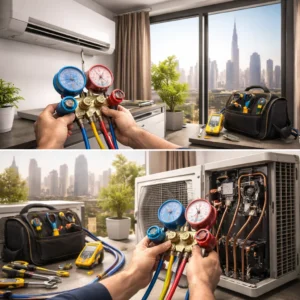
- Monitoring repeated pressure drops
When leaks are suspected, professional AC gas refill and leak repair focuses on fixing the fitting issue, not just refilling gas.
Comparing AC Fitting Methods by Use Case
| Fitting Method | Best Use Case | Strengths | Limitations |
|---|---|---|---|
| Flare Fitting | Split AC systems | High pressure tolerance | Requires precise torque |
| O-Ring Fitting | Modern components | Quick assembly | Seal degradation risk |
| Compression Fitting | Specific applications | No flaring needed | Less common, skill sensitive |
Skill Level and Long-Term Reliability Considerations
AC fitting may look simple, but it requires experience to balance pressure, alignment, and sealing. Poor fitting often survives initial testing but fails under long-term vibration and temperature changes.
Experienced technicians understand how installation choices affect stress on fittings over time. This reduces recurring leaks and improves system lifespan.
Cost Considerations for AC Fitting
AC fitting costs vary depending on multiple factors rather than a single flat rate.
Pricing is influenced by:
- Type of fitting required
- System capacity and refrigerant pressure
- Installation complexity
- Need for vacuuming or leak correction
Instead of focusing on exact numbers, it is more important to understand what the price includes. Transparent fitting services explain scope clearly before work begins.
For services involving installation or repair, professional providers often combine fitting work with inspection, sealing, and system testing as part of broader services such as AC repair or installation support.
How to Avoid Confusion When Choosing the Right AC Fitting Path
To avoid confusion, first identify whether your need is:
- Mechanical fitting replacement or correction
- Full AC installation fitting
- Leak troubleshooting related to fittings
Clear communication helps ensure the right solution is applied without unnecessary cost or repeated work.
When Professional AC Fitting Makes Sense
AC fitting mistakes rarely show immediate failure. Instead, they quietly reduce performance and reliability. Bio On Air handles AC fitting as part of a complete system approach, ensuring proper alignment, sealing, pressure stability, and long-term performance.
Ignoring fitting issues can lead to refrigerant loss, higher electricity usage, and permanent system damage. Addressing fitting quality early is a preventive step, not an unnecessary expense. If you want to discuss whether your issue relates to mechanical fittings or installation fitting, you can use the WhatsApp or Call button at the top right of the page for an initial discussion with our team.
Conclusion
AC fitting is not a single task but a combination of correct component selection, precise installation, and careful system preparation. Whether you are dealing with mechanical fittings or full AC installation, understanding fitting principles helps you avoid leaks, repeated gas refills, and long-term inefficiency.
By choosing the right fitting type, applying correct sealing and torque practices, and ensuring proper installation procedures, you protect your AC system’s performance and lifespan. In environments where AC is essential, proper fitting is one of the most important foundations for reliable cooling and healthy indoor air.