




Understanding ac evaporator location in Dubai is essential when your AC starts showing problems like weak cooling, bad smell, water leakage, or ice buildup. Whether you are dealing with a car AC, split unit, or central system, knowing where the evaporator sits helps you understand the issue and decide the right next step.
Table of Contents
ToggleWhat Is an AC Evaporator and Why It Matters
The evaporator is one of the most important parts of any air conditioning system. It is responsible for absorbing heat from the air inside your space. When warm air passes over the evaporator coil, the refrigerant inside absorbs the heat, cooling the air before it is circulated back.
In simple terms:
- The evaporator = where cooling actually happens
- The condenser = where heat is released outside
Because the evaporator handles moisture, airflow, and cooling directly, it is also the part most prone to issues like dust buildup, mold, and condensation problems—especially in UAE conditions.
AC Evaporator Location in Different Systems
1. Evaporator Location in Cars
In most cars, the evaporator is located inside the dashboard, usually behind the glove compartment or center console area.
Typical location details:
- Hidden behind dashboard panels
- Connected to cabin air filter housing
- Part of the HVAC box assembly
This means you cannot see it directly without partial disassembly.
Why people search for it:
- Musty or vinegar smell from AC vents
- Weak airflow inside cabin
- Water dripping under dashboard
In Dubai, dust and humidity combine inside the evaporator housing, leading to bacterial buildup if not cleaned properly.
2. Evaporator Location in Split AC Units
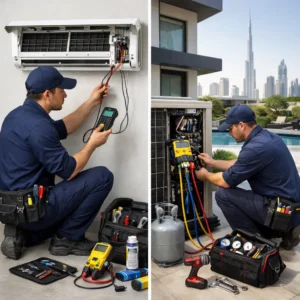
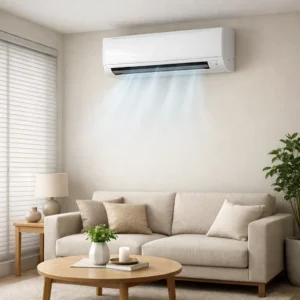
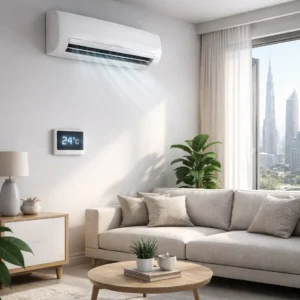
In split AC systems (common in apartments and villas), the evaporator is located inside the indoor unit mounted on the wall.
Where exactly:
- Behind the front panel of the indoor unit
- Right behind the air filter
- Appears as a set of thin metal fins (coil)
When you open the front cover of your AC, the first visible component behind the filters is the evaporator coil.
This is the most accessible evaporator type compared to others.
3. Evaporator Location in Ducted / Central AC Systems
In Dubai apartments and villas, many systems use ducted or central AC. Here, the evaporator is located inside the Fan Coil Unit (FCU).
Typical location:
- Inside ceiling cavity (false ceiling)
- Above bathrooms, corridors, or storage areas
- Hidden behind access panels
The evaporator in these systems is not visible unless you open a ceiling access hatch.
This is why many residents are unsure where it is located.
Evaporator vs Condenser What Is the Difference
| Component | Location | Function |
|---|---|---|
| Evaporator | Inside (room / car / ceiling) | Absorbs heat and cools air |
| Condenser | Outside (balcony / rooftop) | Releases heat outside |
This distinction is important because many people confuse the two when diagnosing AC problems.
Why People Search for AC Evaporator Location
1. Musty or Bad Smell
The evaporator coil collects moisture during operation. In Dubai’s humid conditions, this moisture can combine with dust, creating a perfect environment for bacteria and mold.
This leads to:
- Musty smell
- Vinegar-like odor
- Unpleasant air when AC starts
2. Water Leakage
Water forms naturally during cooling. If the drain line is blocked, water accumulates near the evaporator and starts leaking.
Common signs:
- Water dripping from indoor unit
- Wet ceiling patches (ducted systems)
3. Weak Cooling
If the evaporator coil is dirty or blocked, airflow reduces and cooling becomes weak.
4. Ice Formation on Coil
Restricted airflow or low refrigerant can cause the evaporator to freeze.
This results in:
- Ice buildup on coil
- AC blowing warm air after some time
Dubai-Specific Challenges Affecting Evaporators
1. Dust Accumulation
Dubai’s environment is dust-heavy. Fine particles enter AC systems and settle on evaporator coils.
2. High Humidity
Humidity, especially in coastal areas, increases condensation on the evaporator.
3. Continuous AC Usage
AC systems run almost year-round in the UAE, increasing wear and buildup.
4. Coastal Corrosion
Salt in the air can slowly corrode evaporator coils, especially in beachfront properties.
How to Visually Identify the Evaporator
For Split AC
- Turn off power
- Open front panel
- Remove filters
- Look for metallic fins behind filters
For Ducted AC
- Locate ceiling access panel
- Open hatch carefully
- Find FCU unit
- Evaporator is inside the unit housing
For Cars
- Access glovebox area
- Remove cabin filter
- Evaporator is deeper inside HVAC box
In most cases, car evaporators are not directly visible.
Safety Precautions Before Accessing Evaporator
- Turn off AC power completely
- Avoid touching electrical components
- Use gloves if possible
- Do not force open sealed panels
Improper handling can damage the system or cause safety risks.
DIY Access vs Professional Access
| Scenario | DIY Possible | Professional Needed |
|---|---|---|
| Split AC basic inspection | Yes | No |
| Deep coil cleaning | Limited | Yes |
| Ducted system access | No | Yes |
| Car evaporator cleaning | No | Yes |
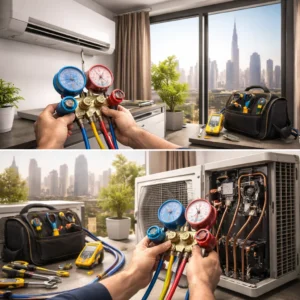
Basic inspection is possible in some cases, but deeper work requires proper tools and experience.
Cleaning the Evaporator What You Can and Cannot Do
What You Can Do
- Clean air filters regularly
- Check for visible dust buildup
- Keep surrounding area clean
What You Should Not Do
- Spray water directly inside unit
- Use harsh chemicals
- Disassemble sealed components
Improper cleaning can damage delicate fins and internal components.
Repair and Replacement Cost in Dubai
The cost depends on the type of system and severity of the issue.
| Service Type | Estimated Cost (AED) |
|---|---|
| Basic evaporator cleaning | 150 – 400 |
| Deep cleaning (professional) | 400 – 900 |
| Leak repair (coil related) | 500 – 1,500 |
| Evaporator replacement | 1,500 – 4,000+ |
Note: These prices are slightly below typical market estimates and may vary depending on system type, accessibility, and condition.
When You Should Call a Professional
- Persistent bad smell
- Water leakage that keeps returning
- Ice buildup on AC unit
- AC not cooling properly
These are signs that the evaporator or related components need proper inspection.
In many cases, what appears to be a simple issue can be caused by deeper problems inside the system. If not handled properly, this can lead to poor air quality, higher electricity usage, and long-term damage. Understanding where the evaporator is helps you identify early warning signs, but resolving the issue correctly requires the right approach. If you need clarity about your AC condition or want to understand the safest next step, you can use the WhatsApp or Call button on the top right to connect with the Bio On Air team for guidance based on your situation.
Conclusion
Knowing the ac evaporator location helps you understand how your AC system works and why certain problems occur. Whether in cars, split units, or central systems, identifying the evaporator is the first step toward proper maintenance, better air quality, and long-term AC performance.