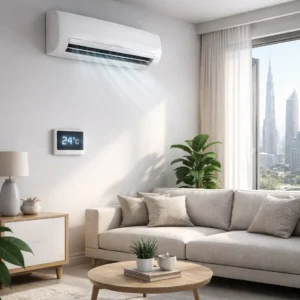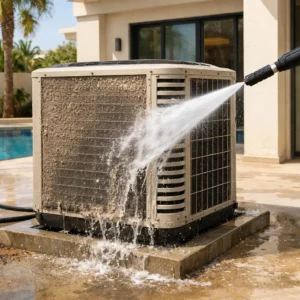





AC energy efficiency in Dubai is not just about comfort—it directly affects your DEWA bill every month. With high temperatures and long AC usage, small adjustments in settings, maintenance, and system choice can significantly reduce electricity consumption while keeping your home cool and stable.
Table of Contents
ToggleWhy AC Energy Efficiency Matters in Dubai
In Dubai, air conditioning is not optional—it runs almost year-round. Unlike moderate climates, AC systems here operate for long hours under extreme heat. This means even small inefficiencies can lead to large increases in electricity consumption.
Most households do not realize that:
- AC systems can account for 60–75% of total electricity usage
- A small temperature change can significantly impact your bill
- Poor maintenance quietly reduces efficiency over time
Improving efficiency is not about using your AC less—it’s about using it smarter.
Optimal Thermostat Setting for Maximum Efficiency
One of the most effective ways to improve AC energy efficiency is setting the right temperature.
In Dubai conditions, the recommended setting is:
- 24°C to 25°C for balanced comfort and efficiency
Many people set their AC to 18–20°C thinking it will cool faster. In reality:
- The AC works harder for longer
- Energy consumption increases significantly
- The room does not cool faster—it only runs longer
How Temperature Affects Your DEWA Bill
Each degree lower than 24°C can increase energy consumption by approximately 5–10%.
For example:
- 24°C → baseline efficiency
- 22°C → up to 10–20% higher energy use
- 20°C → significantly higher consumption
Over a full month, this difference can noticeably impact your DEWA bill.
Using Auto Mode Instead of Manual Cooling
Many users run their AC on constant cooling mode. However, modern systems include “Auto Mode,” which adjusts fan speed and compressor activity based on room temperature.
Benefits of Auto Mode:
- Prevents unnecessary compressor usage
- Maintains stable temperature
- Reduces energy waste
Instead of forcing maximum cooling, Auto Mode allows the system to balance performance and efficiency.
Maintenance Practices That Restore Efficiency
Even the best AC system loses efficiency without proper maintenance. Dust, humidity, and continuous usage in Dubai create buildup inside the system.
1. Filter Cleaning
Dirty filters block airflow, forcing the AC to work harder.
- Clean every 2–4 weeks in Dubai conditions
- Improves airflow and cooling speed
2. Coil Cleaning
Evaporator and condenser coils collect dust over time.
- Reduces heat exchange efficiency
- Increases energy consumption
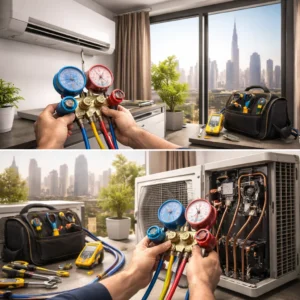
3. Refrigerant Check
Low refrigerant levels reduce cooling performance.
- AC runs longer to achieve the same temperature
- Energy usage increases
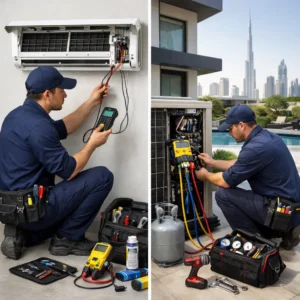
Professional AC maintenance programs help maintain system efficiency over time.
Choosing the Right AC System for Efficiency
ESMA Star Rating
In the UAE, the ESMA (Emirates Authority for Standardization and Metrology) rating indicates energy efficiency.
- More stars = better efficiency
- Higher-rated units consume less electricity
Inverter Technology
Inverter AC systems adjust compressor speed instead of turning on/off repeatedly.
Benefits:
- Lower energy consumption
- More stable temperature
- Reduced wear and tear
While inverter systems cost more initially, they reduce long-term electricity costs.
Correct BTU Sizing for Dubai Climate
Choosing the right AC capacity is critical for efficiency.
| Room Size | Recommended BTU |
|---|---|
| Small room | 9,000 – 12,000 BTU |
| Medium room | 12,000 – 18,000 BTU |
| Large room | 18,000 – 24,000 BTU |
Incorrect sizing leads to inefficiency:
- Too small → runs continuously
- Too large → short cycling, energy waste
Smart Thermostat and Automation
Smart thermostats improve AC energy efficiency by adjusting cooling based on usage patterns.
- Automatic scheduling
- Remote control via mobile apps
- Temperature optimization
This prevents unnecessary cooling when no one is home.
Peak Hour Energy Management
Electricity consumption during peak hours increases total usage.
Strategies:
- Pre-cool your space before peak hours
- Avoid lowering temperature during peak time
- Use curtains and shading to reduce heat gain
Passive Cooling Techniques
Reducing heat entering your home improves AC efficiency.
- Use blackout curtains
- Seal air leaks around windows
- Avoid direct sunlight during peak hours
These simple steps reduce AC workload significantly.
Understanding DEWA Consumption Slabs
Dubai electricity bills are calculated based on usage tiers.
Higher consumption leads to higher cost per unit.
This means:
- Small inefficiencies push you into higher slabs
- Efficient usage keeps you in lower cost ranges
Identifying AC-Related Power Spikes
Signs your AC is causing high consumption:
- Sudden increase in monthly bill
- AC running longer than usual
- Weak cooling with high energy use
These indicate reduced efficiency or system issues.
Common Efficiency Mistakes in Dubai Homes
- Setting temperature too low
- Ignoring filter cleaning
- Overusing manual cooling mode
- Skipping maintenance
These habits increase energy usage without improving comfort.
Long-Term Efficiency Strategy
To maintain AC energy efficiency:
- Set temperature around 24°C
- Use Auto Mode
- Schedule regular maintenance
- Upgrade to inverter systems when needed
If you are noticing higher DEWA bills or reduced cooling performance, it is important to address the issue early. Efficiency loss often happens gradually due to dust buildup, airflow restrictions, or internal system imbalance. Over time, this not only increases electricity costs but also affects indoor air quality and system lifespan. With the right adjustments and proper maintenance, these issues can be corrected before they become costly problems. If you need a clearer understanding of your AC condition, you can use the WhatsApp or Call button on the top right to connect with the Bio On Air team and explore the most suitable solution for your situation.
Conclusion
AC energy efficiency in Dubai depends on smart usage, proper maintenance, and correct system selection. By applying simple adjustments and understanding how your AC system works, you can reduce energy consumption, lower DEWA bills, and maintain a comfortable indoor environment year-round.