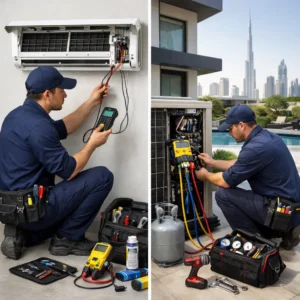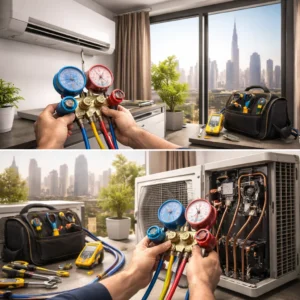





Understanding ac compressor change cost is one of the most confusing and stressful moments for homeowners and property managers, especially in hot climates like the UAE where AC systems are essential. The confusion usually comes from hearing very different price explanations, not knowing whether the compressor is truly the problem, and worrying that a major expense might not actually solve the issue long term. This guide is designed to explain how compressor replacement costs are structured in the real world, what factors truly influence the final expense, and how to decide—calmly and logically—whether changing the compressor is the right move or if replacement makes more sense.
Table of Contents
ToggleWhat the AC Compressor Does and Why It Matters
The compressor is often described as the “heart” of the AC system. Its role is to circulate refrigerant through the system, allowing heat to be absorbed from indoor air and released outside. When the compressor fails, the entire cooling cycle breaks down, which is why compressor issues are usually associated with major repair decisions.
However, it is important to understand that a compressor rarely fails in isolation. In many real-world cases, compressor failure is the result of underlying issues such as electrical problems, incorrect refrigerant levels, or long-term maintenance neglect. This is why compressor replacement cost cannot be judged as a simple “part price” alone.
How AC Compressor Change Cost Is Structured in Real Life
Instead of thinking of compressor replacement as one fixed price, it is more accurate to see it as a cost framework made up of several components. These components can shift depending on system condition, warranty status, and failure severity.
In most cases, ac compressor change cost is influenced by:
- The compressor itself (if not under warranty)
- Labour required to remove and install the unit
- Refrigerant recovery and recharge
- System flushing or cleaning (in burnout cases)
- Electrical inspection and related part replacement
This is why two homes with the “same AC tonnage” can receive very different quotations. The difference is not always markup—it is often the condition of the system and what must be addressed to ensure the new compressor survives.
Why Warranty Status Changes the Cost Significantly
One of the biggest cost variables is whether the compressor is still under manufacturer warranty. Many homeowners are not aware that compressors often have longer warranties than other AC components.
If the compressor is under warranty:
- The cost of the compressor part itself may be covered
- The main expenses shift toward labour and refrigerant handling
- System preparation and testing still apply
In these cases, the ac compressor change cost is often much lower than expected, because you are not paying for the most expensive component. However, warranty coverage does not usually include labour, refrigerant, or additional repairs needed to protect the new compressor.
If the compressor is out of warranty, the cost structure changes. The compressor becomes a major portion of the expense, especially for larger-capacity systems or certain refrigerant types.
How Unit Size and System Capacity Affect Overall Cost
AC compressor replacement cost scales with system size. A compressor for a small residential split unit is very different from one used in a large villa or commercial system.
Key capacity-related factors include:
- Tonnage: Higher tonnage systems require larger, more expensive compressors
- System type: Split, ducted, VRF, or central systems vary significantly
- Installation complexity: Larger systems often require more labour and testing time
This is why it is misleading to compare compressor costs across different properties without context. Capacity does not just affect the part—it affects labour, refrigerant volume, and diagnostic time.
A Practical Repair vs Replace Decision Rule
One of the most important questions homeowners ask is whether they should replace the compressor or replace the entire AC unit. A simple and practical decision rule helps remove emotion from this choice.
In general:
- If the AC unit is relatively new and the compressor is under warranty, replacement usually makes sense
- If the unit is older and the compressor is out of warranty, replacement may offer better long-term value
- If the estimated repair cost approaches a significant portion of a new system, replacement should be considered
This rule is not about pushing replacement—it is about avoiding repeated high-cost repairs on aging systems. A professional AC repair assessment should explain these trade-offs clearly so you can make an informed decision.
Common Hidden Add-On Costs Homeowners Overlook
Another reason ac compressor change cost feels unpredictable is hidden add-on work that becomes necessary after inspection. These are not “extras” in the sales sense—they are protective steps to avoid immediate failure of the new compressor.
Refrigerant Recovery and Recharge
Replacing a compressor requires safe refrigerant recovery and recharging the system after installation. The amount of refrigerant and handling complexity vary by system size and refrigerant type.
System Flushing After Compressor Burnout
If a compressor fails due to burnout, contaminants can spread through the system. In these cases, flushing or deep cleaning is required to protect the new compressor. Skipping this step often leads to premature failure.
Electrical Repairs and Protection
Electrical issues are a leading cause of compressor failure. Wiring, contactors, capacitors, or control boards may need attention. Ignoring these can damage the new compressor.
Labour Composition
Compressor replacement is labour-intensive. The work includes removal, installation, brazing or fitting, pressure testing, vacuuming, and system balancing. Labour is not a single task—it is a sequence of steps that ensure system reliability.
Most Common Reasons AC Compressors Fail
Understanding why compressors fail helps prevent repeat expenses. In real-world service cases, the most common causes include:
- Electrical instability: Voltage fluctuations, failed capacitors, or faulty contactors
- Incorrect refrigerant levels: Overcharging or undercharging stresses the compressor
- Poor airflow: Dirty coils or blocked ducts causing overheating
- Lack of maintenance: Gradual wear without early detection
Preventive care such as regular inspections, proper refrigerant handling, and electrical protection significantly reduces compressor failure risk. Services like AC maintenance and AMC focus on catching these issues early.
Fast-Scan Repair vs Replace Comparison
The table below provides a quick comparison framework to help homeowners think clearly about their options.
| Factor | Repair (Compressor Change) | Replace AC System |
|---|---|---|
| System Age | Newer systems benefit more | Older systems often justify replacement |
| Refrigerant Type | Supported refrigerants are safer | Outdated refrigerants favor replacement |
| Warranty Status | Warranty lowers cost impact | No warranty increases long-term risk |
| Failure Severity | Isolated failure may be repairable | System-wide issues favor replacement |
Critical Warning Diagnose Related Components First
One of the most important warnings for anyone researching ac compressor change cost is this: many issues mimic compressor failure.
Common components that can appear like a failed compressor include:
- Faulty capacitors
- Electrical contactors
- Control boards or sensors
- Thermostat or communication issues
Replacing the compressor without confirming these can lead to unnecessary expense. Proper diagnosis should always rule out these components first, as they can dramatically change the repair decision.
Why Proper Diagnosis Protects Your Investment
Accurate diagnosis is the most valuable part of compressor-related service. It ensures:
- You do not replace parts unnecessarily
- The new compressor is protected from repeat failure
- The system operates efficiently after repair
Professional service providers focus on system health, not just part replacement. This approach reduces long-term costs and improves reliability.
When Compressor Issues Should Be Handled Carefully
Compressor-related AC problems rarely resolve on their own. If ignored or handled incorrectly, they can lead to system contamination, higher electricity consumption, and repeated breakdowns. Bio On Air helps assess compressor issues through detailed inspection, clear explanation, and responsible recommendations—whether that means repair or replacement. Acting early helps protect system value and prevents unnecessary expenses. You can use the WhatsApp or Call button at the top right of this page to discuss your AC condition and understand the safest next step.
Conclusion
Understanding ac compressor change cost requires looking beyond part prices. Real-world costs depend on warranty status, system capacity, refrigerant type, labour requirements, and underlying system health. A clear repair-versus-replace rule based on age and estimated repair scope helps homeowners make decisions with confidence rather than pressure.
Most importantly, compressor replacement should never be rushed without full diagnosis. Many failures are caused by related components that are cheaper and safer to address first. With proper inspection, transparent explanation, and preventive maintenance, compressor-related decisions become manageable instead of overwhelming—protecting comfort, indoor air quality, and long-term value.