




If your ac breaker not working, the situation can feel urgent—especially in Dubai’s heat where cooling is essential, not optional. A breaker that keeps tripping or refuses to reset is not just an electrical inconvenience; it is a warning sign that something in your AC system or power supply needs attention. This guide will walk you through safe emergency checks, the most common causes, Dubai-specific factors, repair cost expectations, and clear signs of when you should stop troubleshooting and call for professional help.
Table of Contents
ToggleImmediate Emergency Troubleshooting Steps
Before assuming the worst, there are a few safe checks you can perform. These steps are designed to help you determine whether the issue is minor or potentially dangerous.
Step 1: Turn Off the Thermostat First
Before touching the breaker panel, switch your thermostat to OFF. This prevents the AC from immediately drawing power if the breaker resets.
Step 2: Perform a Safe Power Reset
Go to your electrical panel and locate the AC breaker. If it is in the middle position, it has likely tripped. Move it fully to OFF, wait 60–90 seconds, then switch it back to ON.
Important: If the breaker trips again instantly, do not keep resetting it. Repeated resets can cause wiring damage or increase fire risk.
Step 3: Check for Building or Area Power Issues
Sometimes the breaker is not the problem. Check:
- Are other heavy appliances working normally?
- Are neighbors experiencing power issues?
- Is there a building-level electrical problem?
If everything else works fine and only the AC breaker trips, the issue is likely internal to your AC system.
Why an AC Breaker Trips in the First Place
An AC breaker trips to protect your home from electrical overload or short circuits. It is not the enemy—it is a safety mechanism. When your ac breaker not working, the breaker is reacting to abnormal electrical behavior.
Most Common Causes of AC Breaker Trips
1. Overloaded Circuit
If your AC shares a circuit with other high-power appliances, the total electrical load may exceed breaker capacity. This is common in older properties where electrical upgrades were never done.
Signs:
- Breaker trips when multiple appliances run simultaneously
- Problem reduces when other appliances are turned off
2. Dirty Air Filters Restricting Airflow
This might surprise you. A severely clogged air filter forces the AC to work harder. When airflow is blocked, internal components overheat, increasing electrical draw and triggering the breaker.
Check your filter. If it looks gray, dusty, or packed with debris, replace or clean it immediately.
3. Faulty Capacitor or Contactor
Capacitors help start the compressor and fan motors. When a capacitor weakens, the AC struggles to start, drawing excessive current and causing breaker trips.
Symptoms include:
- Clicking sound from outdoor unit
- AC humming but not starting
- Breaker trips seconds after startup
4. Grounded Compressor
This is more serious. If the compressor windings short to ground, the breaker trips immediately. In this case, resetting repeatedly will not fix the issue.
Warning signs:
- Breaker trips instantly after reset
- Burning smell near outdoor unit
5. Low Refrigerant Causing Overheating
Low refrigerant increases compressor workload. The harder the compressor works, the more current it draws, potentially tripping the breaker.
Signs of low refrigerant:
- Warm air from vents
- Ice buildup on indoor coil
- Hissing sound near outdoor unit
Dubai-Specific Factors That Increase Breaker Trips
Extreme Heat Stress
In Dubai, AC systems run for extended hours under extreme outdoor temperatures. Continuous operation increases electrical strain, especially during peak summer.
Dust and Sand Buildup
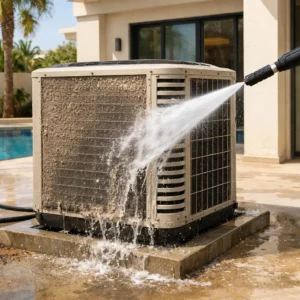
Outdoor units accumulate dust quickly. When condenser coils are dirty, heat cannot dissipate efficiently, causing compressor overheating and higher amperage draw.
Humidity and Electrical Corrosion
Coastal humidity can cause corrosion in breaker panels and contact points. Corroded connections create resistance, leading to overheating and breaker trips.
When NOT to Reset the Breaker
It is crucial to understand when resetting becomes dangerous.
Do NOT reset if:
- The breaker trips immediately every time
- You smell burning or see sparks
- The breaker feels hot to touch
- You hear loud buzzing from panel
Repeated resets in these situations can cause wiring damage or increase fire risk.
Basic Breaker Replacement Guidance
If your ac breaker not working even when no overload exists, the breaker itself might be faulty.
Common Breaker Types in UAE Homes
- Single-pole breakers (typically 16A–32A)
- Double-pole breakers for larger AC systems
- MCB (Miniature Circuit Breaker)
- RCBO (Residual Current Breaker with Overcurrent)
Breaker replacement should only be performed by a licensed electrician. Even a small mistake can create serious hazards.
Expected Repair and Replacement Cost Ranges
Repair cost depends on root cause. Based on common AC repair categories:
- Minor electrical adjustments: AED 230–450
- Moderate issues (capacitor replacement, coil cleaning): AED 320–650
- Comprehensive repairs (fan motor, PCB): AED 450–1,350
- Major compressor replacement: AED 900–3,600
Breaker replacement alone may be relatively affordable, but if compressor damage is involved, cost increases significantly.
DIY vs Urgent Professional Help — How to Decide
Likely DIY-Fixable Situations
- Dirty air filter
- Overloaded circuit (reduce appliance usage)
- Loose thermostat setting
Requires Professional AC Repair
- Breaker trips instantly after reset
- Repeated tripping within minutes
- Burning smell or unusual noise
- Outdoor unit not starting
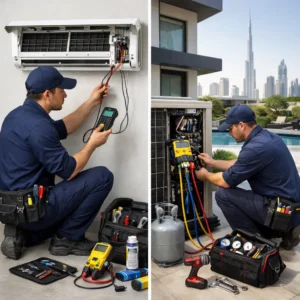
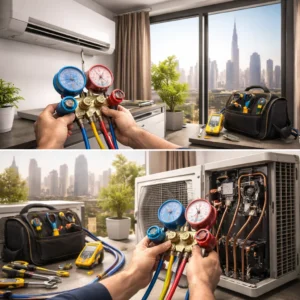
Professional diagnosis is important because electrical and refrigerant-related problems require specialized tools and safety knowledge. You can review how structured professional repair is handled through our AC repair service page.
When AC Breaker Issues Should Be Handled Properly
If your AC breaker keeps tripping, delaying repair can reduce indoor air quality, increase electricity bills, and cause permanent component damage. Bio On Air handles AC electrical faults with careful inspection, safe testing procedures, and clear explanations so you understand the real cause before any repair begins. Acting early prevents minor electrical strain from becoming major compressor failure. You can use the WhatsApp or Call button at the top right of this page to discuss your AC breaker symptoms directly with our team.
Conclusion
When your ac breaker not working, it is a signal—not a random failure. It may indicate airflow restriction, electrical stress, refrigerant issues, or component damage. Safe troubleshooting starts with thermostat shutdown and controlled reset, but repeated tripping requires deeper inspection. In Dubai’s climate, dust and heat amplify electrical strain, making timely action critical. Knowing when to stop DIY and call for professional help protects your safety, your comfort, and your long-term AC investment.