




Knowing the ac filter location in house is essential for maintaining clean air and efficient cooling, especially in Dubai where dust and humidity are constant. Many homeowners are unsure where to find their AC filter, which leads to poor airflow, higher energy use, and indoor air issues. This guide explains exactly where to look, how to access it safely, and what to do next.
Table of Contents
ToggleCommon AC Filter Locations in Dubai Homes
AC filter placement depends on the type of system installed. In Dubai, most homes use either wall-mounted split units, ducted systems, or centralized AC systems. Each has a different filter location.
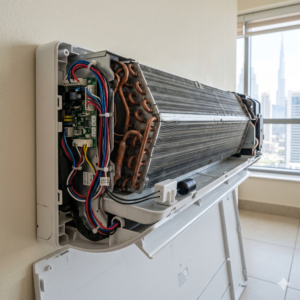
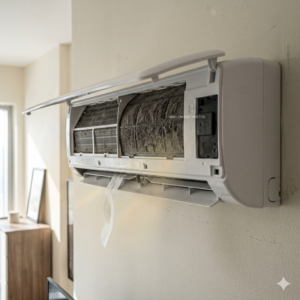
AC Filter Location in Wall-Mounted Split Units
Wall-mounted split AC units are very common in apartments and smaller homes.
Where to find the filter:
- Behind the front panel of the indoor unit
- Inside the top cover that opens upward
To access it:
- Turn off the AC
- Gently lift the front panel
- Remove the mesh filters located inside
These filters are usually thin, washable mesh filters designed to catch dust particles.
AC Filter Location in Ducted Systems
Ducted AC systems are common in villas and larger apartments.
Where to find the filter:
- Return air ceiling grille (most common)
- Behind large rectangular vents in the ceiling
The return air grille is typically larger than supply vents and is designed to pull air back into the system.
In many cases, the filter sits directly behind this grille.
AC Filter Location in Central AC Systems
Central AC systems are usually installed in villas or high-end apartments.
Where to find the filter:
- Inside a utility closet or service room
- Near the air handler unit (AHU)
- Inside a dedicated filter slot in the duct system
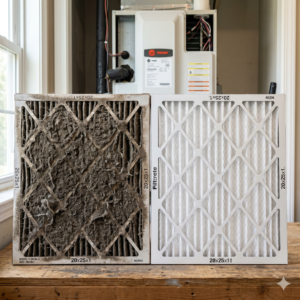
These filters are often larger and may be disposable or high-efficiency filters.
Where to Look in Apartments vs Villas
| Property Type | Common Filter Locations |
|---|---|
| Apartment | Split unit panel, ceiling return grille |
| Villa | Utility room, ceiling return vents, AHU cabinet |
In apartments, filters are usually easy to access. In villas, they may be hidden in service areas or ceiling spaces.
How to Identify Return vs Supply Vents
Many people confuse return vents with supply vents, which makes it harder to find the filter.
- Return vent: pulls air into the system, usually larger, may contain a filter
- Supply vent: pushes cool air out, smaller, does not contain a filter
A simple way to check:
- Place your hand near the vent
- If air is being pulled in → return vent
- If air is blowing out → supply vent
Step-by-Step Guide to Access the AC Filter Safely
Step 1: Turn Off the AC System
Always turn off the system before accessing the filter to avoid damage or injury.
Step 2: Locate the Access Point
Identify whether your system uses a front panel, ceiling grille, or utility unit.
Step 3: Open Carefully
Use gentle force when opening panels or grilles to avoid breaking clips or hinges.
Step 4: Remove the Filter
Slide or lift the filter out slowly to avoid spreading dust.
Step 5: Inspect Condition
Check for dust buildup, moisture, or damage.
Washable vs Disposable Filters
| Type | Description | Maintenance |
|---|---|---|
| Washable Mesh Filter | Common in split units | Clean with water |
| Disposable Pleated Filter | Common in central systems | Replace periodically |
Washable filters are reusable, while disposable filters need to be replaced once dirty.
Recommended Cleaning Frequency in Dubai
Due to high dust levels in Dubai, filters require more frequent maintenance than in other regions.
- Light use: every 3–4 weeks
- Regular use: every 2–3 weeks
- Heavy use: weekly check recommended
Regular cleaning prevents airflow blockage and improves cooling efficiency.
Signs Your Filter Needs Cleaning or Replacement
- Weak airflow
- Dust buildup around vents
- AC taking longer to cool
- Unusual smell when AC starts
These signs indicate restricted airflow due to a dirty filter.
When Filter Cleaning Is Not Enough
Sometimes, cleaning the filter does not solve the problem.
You may need deeper maintenance if:
- Air still smells musty after cleaning
- Cooling performance does not improve
- Dust returns quickly
- There are signs of internal buildup
In such cases, issues may exist inside ducts, coils, or internal components.
Troubleshooting Filter Problems
If the Filter Is Wet
This may indicate condensation issues, clogged drain lines, or humidity problems.
If the Filter Is Iced
This often means airflow is restricted or refrigerant levels are low.
If the Filter Is Extremely Dirty
This suggests long-term neglect or heavy dust exposure.
In these cases, deeper system inspection may be required.
Why Filter Location Matters More Than You Think
Knowing where your AC filter is allows you to maintain it regularly, which directly impacts:
- Indoor air quality
- Energy efficiency
- AC lifespan
Ignoring filter maintenance can lead to larger system issues over time.
Connection Between Filters and Air Quality
Your AC filter is the first line of defense against dust, allergens, and airborne particles.
When it is clean:
- Air is fresher
- Cooling is faster
- Energy usage is lower
When it is dirty:
- Air becomes polluted
- AC works harder
- System wear increases
Common Mistakes When Handling AC Filters
- Cleaning too late
- Installing filter incorrectly
- Using damaged filters
- Ignoring moisture issues
These mistakes reduce system performance and can cause damage.
Preventive Maintenance Tips
- Set reminders for filter cleaning
- Inspect filters regularly
- Keep surrounding areas clean
- Monitor airflow changes
Simple habits can prevent major AC problems.
If you are unsure about your AC filter location or notice signs like persistent dust, weak airflow, or unusual odors, it is important not to ignore them. These issues can indicate deeper problems affecting indoor air quality, system efficiency, and long-term performance. Addressing them early helps prevent more serious damage and higher repair costs. If you need guidance or want to better understand your AC system condition, you can use the WhatsApp or Call button on the top right to connect with the Bio On Air team and discuss the most suitable next step.
Conclusion
Understanding the ac filter location in house helps you maintain your AC system more effectively. By knowing where to look, how to clean, and when to act, you can improve air quality, reduce energy usage, and extend the life of your AC system.