




Choosing the right ac settings for summer in Dubai is not just about comfort—it directly affects your electricity bill, indoor air quality, and AC lifespan. With extreme heat and humidity, using the correct temperature, mode, and daily strategy can reduce energy costs while keeping your space consistently cool.
Table of Contents
ToggleWhy AC Settings Matter More in Dubai Summers
Dubai summers are intense, with outdoor temperatures often exceeding 40°C. Your AC system works continuously to maintain indoor comfort. Incorrect settings can force the system to overwork, leading to higher electricity consumption, uneven cooling, and faster wear.
In many cases, the issue is not the AC unit itself, but how it is used. Small adjustments in settings can make a significant difference in both comfort and cost.
Recommended Temperature Setting for Summer
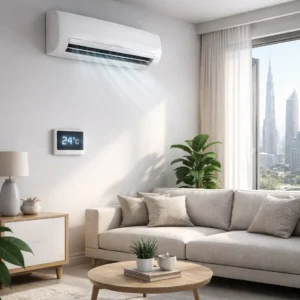
The most widely recommended AC temperature in Dubai is 24°C. This is considered the balance point between comfort, efficiency, and system performance.
Why 24°C works best:
- Maintains a comfortable indoor environment
- Reduces strain on the AC compressor
- Helps control electricity consumption
- Prevents excessive dryness or cold spots
Lowering the temperature below 22°C may feel cooler initially, but it significantly increases energy usage without providing long-term comfort benefits.
Energy Savings Per Degree Adjustment
Every degree matters when it comes to energy consumption.
| Temperature Setting | Estimated Energy Impact |
|---|---|
| 22°C | Highest energy consumption |
| 23°C | Moderate-high consumption |
| 24°C | Balanced efficiency |
| 25–26°C | Lower energy usage |
As a general guideline, increasing your thermostat by just 1°C can reduce electricity usage by around 5–8%. Over a full Dubai summer, this difference becomes significant.
Why Lower Temperature Does Not Cool Faster
A common misconception is that setting the AC to 18°C will cool the room faster. In reality, AC systems cool at a fixed rate regardless of the set temperature.
Setting a lower temperature only means the system will run longer, not faster. This leads to:
- Higher electricity consumption
- Overworking the compressor
- Uneven cooling
The smarter approach is to maintain a stable, efficient temperature rather than pushing the system to extremes.
Best AC Settings for Different Times of the Day
Daytime Use
Recommended setting: 24–25°C
This keeps the room comfortable while minimizing energy usage during peak heat hours.
Sleeping Time
Recommended setting: 25–26°C
During sleep, your body requires slightly less cooling. Higher temperatures also reduce dryness and improve sleep quality.
When Away from Home
Recommended setting: 26–28°C or OFF
If you are away for several hours, increasing the temperature or turning off the AC helps save energy without affecting comfort when you return.
Understanding AC Modes for Summer
Auto Mode
Automatically adjusts cooling based on room temperature. Ideal for maintaining stable comfort without manual adjustments.
Cool Mode
Standard cooling mode. Best for direct temperature control.
Dry Mode
Removes excess humidity without heavy cooling. Useful during humid days when the air feels sticky.
Eco Mode
Optimizes performance to reduce energy consumption. Slightly slower cooling but more efficient.
Fan Mode
Circulates air without cooling. Useful for maintaining airflow when cooling is not needed.
Choosing the right mode helps balance comfort and efficiency depending on the situation.
Humidity Control and Comfort
Humidity plays a major role in how temperature feels. In Dubai, indoor humidity can increase due to sealed environments and daily activities like cooking and showering.
Using dry mode occasionally can help:
- Reduce moisture in the air
- Improve comfort at higher temperatures
- Prevent mold growth
Essential Pre-Summer AC Preparation
1. Clean or Replace Filters
Dirty filters restrict airflow and reduce cooling efficiency.
2. Check Outdoor Unit
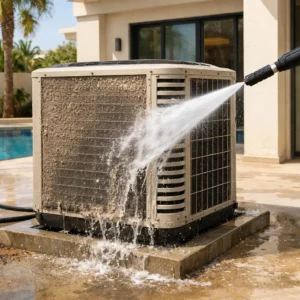
Ensure the condenser is free from dust and debris.
3. Inspect Airflow
Blocked vents or ducts can reduce cooling performance.
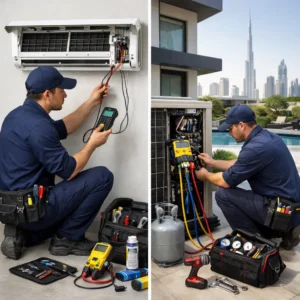
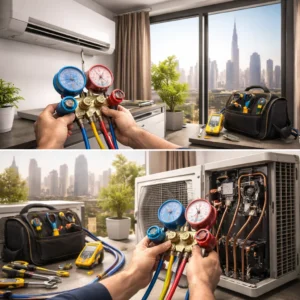
Regular maintenance through proper AC maintenance planning helps ensure your system operates efficiently throughout summer.
Passive Cooling Strategies to Reduce AC Load
AC settings work best when combined with simple passive cooling techniques:
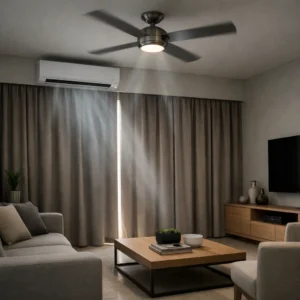
- Use blackout curtains to block sunlight
- Close doors and windows to prevent heat entry
- Seal gaps to avoid air leakage
- Use ceiling fans to improve air circulation
These methods reduce the workload on your AC system and improve overall efficiency.
Impact on DEWA Electricity Bills
Your AC settings have a direct impact on your DEWA bill. Electricity consumption increases significantly when the AC runs at lower temperatures for long periods.
Dubai uses a slab tariff system, where higher consumption leads to higher cost per unit.
| Usage Level | Cost Impact |
|---|---|
| Low consumption | Lower tariff rate |
| High consumption | Higher tariff rate |
Maintaining efficient AC settings helps keep your usage within lower tariff slabs, reducing overall costs.
Common Mistakes in Summer AC Usage
- Setting temperature too low
- Ignoring filter cleaning
- Running AC continuously at maximum load
- Not using appropriate modes
These mistakes increase energy consumption and reduce system lifespan.
Long-Term Benefits of Correct AC Settings
- Lower electricity bills
- Better indoor comfort
- Improved air quality
- Extended AC lifespan
Proper AC usage is not just about cooling—it is about maintaining a balanced indoor environment.
If your AC is not performing as expected even with the correct settings, it may indicate underlying issues such as airflow restriction, internal dirt buildup, or system inefficiency. These problems can reduce cooling performance, increase electricity consumption, and affect indoor air quality over time. Addressing them early helps prevent more serious damage and higher repair costs. If you need clarity about your AC condition or performance, you can use the WhatsApp or Call button on the top right to connect with the Bio On Air team and understand the most suitable next step.
Conclusion
Using the right ac settings for summer in Dubai can significantly improve comfort while reducing energy costs. By maintaining efficient temperature levels, choosing the correct modes, and preparing your system properly, you can enjoy a cooler, healthier, and more cost-effective indoor environment.