




When people notice ac mould, the first reaction is usually confusion: is it really mould, or just dust and residue? In many homes and offices, dark spots around the AC vents, a musty smell when the unit turns on, or repeated allergy symptoms raise concern. In warm and humid regions like the UAE, AC mould is not rare, but it should never be ignored. This article is written to help you clearly identify what you are seeing, understand where mould actually grows inside an AC system, know what is safe to clean yourself, recognize when the risk goes beyond DIY, and take practical next steps to prevent it from returning.
Table of Contents
ToggleHow to Visually Identify AC Mould vs Dust or Residue
One of the biggest pain points for users is uncertainty. Many people clean visible dirt around AC vents only to find that the smell or symptoms return. This often happens because mould was misidentified as ordinary dust.
Here are common visual patterns that help distinguish ac mould from harmless residue:
- Colour: mould often appears black, dark green, grey, or brown. Dust is usually light grey or beige.
- Texture: mould looks patchy, fuzzy, or uneven, while dust appears powdery and uniform.
- Pattern: mould forms clustered spots or irregular stains, not a smooth layer.
- Reaction to wiping: mould may smear or leave staining, while dust wipes away cleanly.
If you notice spots that reappear quickly after cleaning, especially in the same corners or edges, this strongly suggests mould rather than surface dirt. Odour is another clue. A musty or damp smell when the AC starts often points to biological growth inside the unit.
Common Hidden Internal Sources of AC Mould
Visible mould is often only a symptom. The real problem usually exists deeper inside the system, where moisture and airflow combine to create ideal growth conditions.
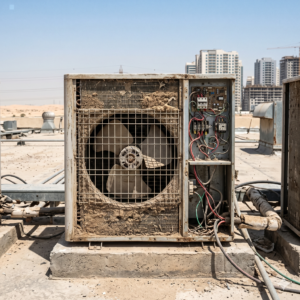
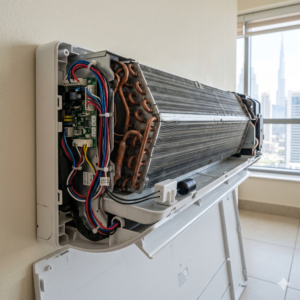
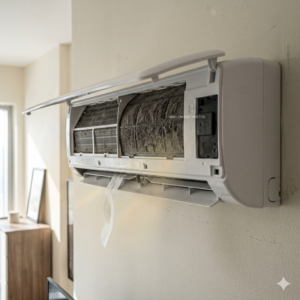
Common hidden mould-prone areas inside AC units include:
- Evaporator coils: constantly cold surfaces that collect condensation.
- Drain pans and drain lines: stagnant water encourages mould growth.
- Blower and fan housing: organic particles stick to damp surfaces.
- Internal insulation: porous materials can trap moisture and spores.
- Duct connections: especially where condensation forms repeatedly.
This is why wiping vents alone rarely solves the problem. Even if visible mould disappears, spores from internal areas are redistributed through airflow once the AC runs again.
When mould is suspected inside ducts or internal airflow paths, professional AC duct cleaning may be required to remove hidden contamination that cannot be reached safely from the outside.
Safe DIY Cleaning Scope for AC Mould
Many users want to know what they can safely do themselves. DIY cleaning can help in early or mild cases, but only within clear limits.
What is generally safe to clean yourself:
- External vent covers
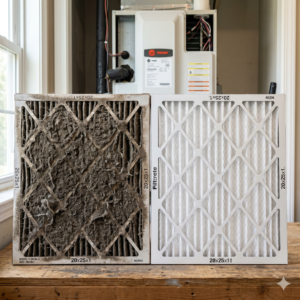
- Removable air filters
- Surface-accessible plastic panels (with power off)
Recommended basic tools and materials:
- Soft brush or microfiber cloth
- Mild detergent or AC-safe cleaner
- White vinegar diluted with water (for non-metal surfaces)
- Protective gloves and mask
Safe cleaning steps:
- Turn off power to the AC unit completely.
- Remove and wash filters with mild soap and warm water.
- Wipe visible surfaces gently without soaking components.
- Allow all parts to dry fully before reinstalling.
Drying is critical. Running the AC with moisture still present can actually worsen mould growth. Never spray liquids directly into the unit or onto electrical components.
What you should not attempt:
- Opening sealed internal compartments
- Scrubbing coils aggressively
- Using bleach inside the AC
- Applying strong chemicals without ventilation
Once mould is embedded inside coils, blower housing, or insulation, DIY cleaning becomes ineffective and potentially unsafe.
Why AC Mould Keeps Coming Back
Recurring mould is one of the most frustrating issues users face. Even after cleaning, the problem reappears weeks later. This usually means the underlying causes were not addressed.
Common reasons mould returns include:
- High humidity: persistent moisture feeds growth.
- Poor airflow: stagnant air allows condensation to linger.
- Incorrect usage habits: turning off AC immediately without drying cycle.
- Clogged drainage: water remains trapped inside the unit.
- Dirty coils: organic buildup holds moisture.
Some modern AC units include built-in drying or fan-only modes designed to reduce moisture after cooling cycles. If these features are not used or configured correctly, mould risk increases.
Long-term prevention often requires more than surface cleaning. This is where deeper internal hygiene solutions such as AC deep cleaning become relevant, as they target moisture-prone internal components.
Health and Risk Indicators You Should Not Ignore
Another major pain point is knowing when mould exposure is no longer safe. Not all mould looks dramatic, but health impact can still be significant.
Warning signs include:
- Persistent coughing, sneezing, or throat irritation indoors
- Headaches or fatigue that improve outside the space
- Eye irritation or skin reactions
- Strong musty odour that does not fade
If symptoms persist despite cleaning visible areas, mould may be widespread internally or affecting the indoor environment beyond the AC unit itself.
In such cases, continuing DIY attempts can increase exposure risk. Professional assessment is advised to determine whether the issue is confined to the AC or affecting ducts and room air quality.
AC Mould Behaviour Across Different AC Unit Types
Not all AC systems behave the same way when it comes to mould growth.
| AC Type | Mould Risk Level | Cleaning Difficulty |
|---|---|---|
| Split AC | Moderate | Medium |
| Window AC | High | High |
| Central AC | High | Very High |
| Ductless Multi-Split | Moderate | Medium |
Central AC systems often hide mould deeper inside ducts and insulation, making surface cleaning ineffective. This is why central systems frequently require professional duct-level intervention.
Region-Aware Prevention and Next-Step Considerations
In regions like the UAE, mould terminology and products often follow international standards. You may see terms like “anti-mold treatment,” “sanitisation,” or “biocidal fogging.” Not all products are equal.
Effective prevention focuses on:
- Moisture control, not just chemical treatment
- Improving airflow and drainage
- Using AC-safe antimicrobial solutions
- Regular inspection and hygiene schedules
For ongoing protection, combining proper usage habits with periodic professional care such as AC maintenance and AMC services helps reduce mould recurrence, especially in high-humidity environments.
When AC Mould Should Be Addressed Professionally
AC mould rarely resolves on its own. If left untreated, it can spread internally, reduce cooling efficiency, worsen indoor air quality, and increase health risks. Bio On Air handles AC mould-related issues through structured inspection, deep cleaning, and air-quality-focused solutions that address both visible growth and hidden sources. Acting early is a preventive decision that helps protect health, comfort, and long-term system performance. If you notice persistent mould, odour, or symptoms, you can use the WhatsApp or Call button at the top right of this page to discuss the safest next step with our team.
Conclusion
AC mould is not just a cosmetic issue. It is a sign of moisture imbalance, airflow problems, or internal contamination that can affect comfort and health. Understanding how to identify mould, knowing what can be cleaned safely, and recognizing when professional intervention is needed empowers you to make better decisions.
In climates where AC runs for long hours, prevention is always easier than repeated cleaning. By addressing root causes, improving usage habits, and choosing the right level of care at the right time, you reduce risk and maintain healthier indoor air for the long term.