




Duct ac installation is a major home decision, not just a technical upgrade. Many homeowners consider ducted AC because they want even cooling, cleaner aesthetics, and better long-term comfort—but not every home is automatically suitable. This guide is designed to remove confusion, answer real homeowner pain points, and help you decide whether duct AC is right for your space, how it works, what it realistically costs, and how to avoid mistakes that lead to poor airflow, humidity problems, or wasted money.
Table of Contents
ToggleAssessing Whether Your Home Is Suitable for Duct AC Installation
Before discussing equipment, brands, or prices, the most important step in duct ac installation is assessing whether your home can actually support a ducted system properly. Skipping this step is one of the main reasons homeowners end up disappointed after installation.
Space Availability for Ducting and Equipment
Ducted AC systems require physical space that is often hidden from view. This includes:
- Ceiling voids or false ceilings for duct runs
- A location for the indoor air handling unit
- Outdoor space for the condenser unit
Homes with sufficient ceiling height or existing false ceilings are generally more suitable. In apartments or villas with limited ceiling clearance, duct routing can become complex and may reduce ceiling height further, which affects both aesthetics and comfort.
Structural Impact and Modification Considerations
Duct ac installation is not purely mechanical. It can involve structural coordination such as ceiling openings, access panels, and sometimes minor civil work. A proper assessment looks at:
- Whether beams or slabs restrict duct paths
- If access panels can be added without visual disruption
- How maintenance access will be handled long-term
Ignoring these aspects often leads to poor airflow design or difficult maintenance later.
Ducted vs Ductless Comparison
Many homeowners assume ducted AC is always superior, but that is not always true. Understanding the difference helps confirm whether central air is the right choice.
| Aspect | Ducted AC | Ductless (Split/VRF) |
|---|---|---|
| Visual appearance | Hidden vents, clean look | Visible indoor units |
| Cooling distribution | Even across rooms | Room-specific |
| Installation complexity | Higher | Lower |
| Flexibility | Lower once installed | High |
If your priority is uniform cooling and aesthetics, ducted AC makes sense. If flexibility and minimal construction are more important, ductless systems may be more practical.
Understanding the Anatomy of a Ducted AC System
One reason duct ac installation feels intimidating is because most components are hidden. Understanding the anatomy helps remove technical confusion and allows you to ask better questions.
Core Components of a Ducted AC System
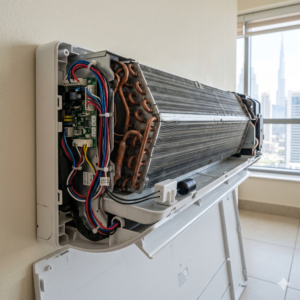
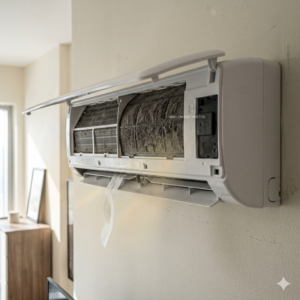
- Air Handling Unit (AHU): The indoor unit that cools and pushes air into ducts.
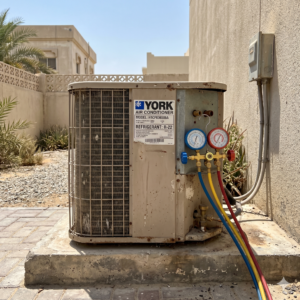
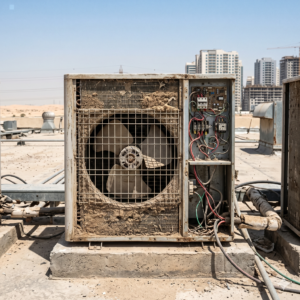
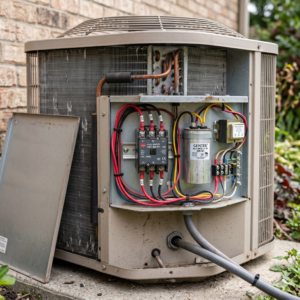
- Condenser Unit: The outdoor unit that releases heat.
- Duct Network: Channels that distribute air to different rooms.
- Supply and Return Vents: Openings that deliver and pull air.
- Thermostat and Controls: Regulate temperature and operation.
Each component must work together. A high-quality AC unit cannot compensate for poorly designed ductwork.
How Airflow Logic Works
Airflow design is the heart of duct ac installation. Cool air is supplied into rooms while warmer air returns to the system for re-cooling. Balanced airflow ensures:
- Consistent temperature across rooms
- Stable humidity levels
- Quiet operation
Poor airflow balance can result in some rooms being too cold while others remain warm, even with a powerful system.
Duct Material Options
Ducts are not all the same. Common materials include:
- GI (galvanized iron) ducts for durability
- Pre-insulated panels for thermal efficiency
- Flexible ducts for short connections only
Material choice affects noise levels, energy loss, and long-term performance.
Why Load Calculation Is the Most Critical Step
Many installation problems begin long before equipment arrives—during sizing. Proper load calculation determines how much cooling your home actually needs.
What Load Calculation Really Measures
A professional load calculation considers:
- Room sizes and ceiling height
- Sun exposure and insulation
- Number of occupants
- Appliances generating heat
This is not guesswork. Using rules of thumb or copying a neighbor’s system often leads to wrong sizing.
Risks of Oversizing and Undersizing
- Oversized systems: Short cycling, poor humidity control, higher energy use.
- Undersized systems: Constant running, uneven cooling, faster wear.
Correct sizing ensures comfort, quiet operation, and long-term efficiency.
Realistic Project Overview: Installation Types, Costs, and Timelines
Duct ac installation projects vary widely, but understanding typical ranges helps set realistic expectations.
Common Installation Scenarios
- New construction or full renovation
- Retrofit into an existing home
- Partial ducting for selected zones
New builds are usually simpler because ducts are planned early. Retrofits require more coordination.
General Cost Expectations
While exact pricing depends on design and capacity, homeowners should expect duct ac installation costs to typically fall within these broad ranges:
- Small residential systems: approximately AED 13,000–20,000
- Medium homes or villas: around AED 18,000–30,000
- Larger homes or advanced systems: AED 30,000+
These figures usually include equipment, ductwork, installation labor, and basic commissioning. Prices can change based on material choice, access difficulty, and system complexity.
For a clearer breakdown of how installation and replacement projects are handled, homeowners can review the AC installation and replacement service page.
Typical Timelines
- Assessment and design: a few days
- Duct fabrication and preparation: several days
- Installation and testing: one to two weeks for most homes
Rushing installation often compromises airflow quality.
Contractor Red Flags to Watch For
Choosing the wrong contractor can undermine even the best equipment.
Red Flags During Quotation
- No site inspection before pricing
- No mention of load calculation
- One-size-fits-all system recommendations
Red Flags During Installation
- Overuse of flexible ducts
- No airflow balancing
- Lack of access panels
Quality duct ac installation is as much about craftsmanship as equipment.
Hidden Considerations That Affect Final Performance
Permits and Approvals
Some properties require approvals for duct modifications or equipment placement. Skipping this step can cause delays later.
Testing and Commissioning
After installation, proper testing ensures:
- Correct airflow to each room
- Stable temperature control
- No air leaks or excessive noise
Post-Installation Verification
A professional contractor should verify system performance and explain maintenance needs. This step protects your investment.
When Duct AC Installation Should Be Handled Professionally
Duct ac installation affects comfort, air quality, energy efficiency, and long-term operating cost. Mistakes are expensive to fix once ceilings are closed and ducts are hidden. Bio On Air supports homeowners through proper assessment, system design, professional installation, and post-installation verification to ensure the system performs as intended. If you are planning a ducted system or evaluating whether it is right for your home, using the WhatsApp or Call button at the top right of this page allows you to discuss options early and avoid costly missteps.
Conclusion
Duct ac installation is not simply about installing a powerful cooling system. It is about matching the right system to your home, designing airflow correctly, sizing the equipment accurately, and executing installation with attention to detail. When done properly, ducted AC delivers quiet, even cooling and long-term comfort.
Homeowners who take the time to assess suitability, understand system anatomy, insist on proper load calculation, and choose contractors carefully are far more likely to enjoy efficient performance without surprises. In a climate where AC is essential, informed planning is the most effective way to protect comfort, budget, and system lifespan.