




Searching for duct cleaning pros and cons usually means you are trying to make a careful decision, not rushing into a service just because it sounds “healthy” or “recommended.” Many homeowners and property managers are understandably skeptical about routine duct cleaning, especially after hearing mixed opinions from authorities, technicians, and even friends who saw little difference after paying for it. This article is written to objectively explain when duct cleaning actually makes sense, when it does not, and how you can classify your own situation without fear-based pressure or unnecessary spending.
Table of Contents
ToggleWhy Duct Cleaning Is Often Questioned by Authorities
One reason duct cleaning creates confusion is that many reputable authorities and industry guidelines do not recommend it as a routine or automatic maintenance task. This often surprises homeowners who assume duct cleaning should be done regularly, just like filter replacement.
The authority perspective generally highlights a simple principle: dust inside ducts does not automatically mean a problem. In a properly functioning HVAC system, most dust sticks to duct surfaces and does not continuously circulate into living spaces. If airflow is stable, filters are doing their job, and there are no signs of contamination, routine duct cleaning may deliver little measurable benefit.
This does not mean duct cleaning is useless. It means it should be condition-based, not schedule-based. Authorities question routine duct cleaning mainly because:
- There is limited evidence that routine cleaning improves indoor air quality in healthy systems.
- Visible dust inside ducts does not necessarily enter living spaces.
- Improper cleaning can cause more harm than benefit.
This authority skepticism is important because it validates homeowners who hesitate before agreeing to duct cleaning. Being cautious does not mean you are ignoring health—it means you are trying to apply the right solution to the right problem.
Understanding What Duct Cleaning Actually Does
Before comparing duct cleaning pros and cons, it helps to clearly understand what duct cleaning is supposed to accomplish.
Professional duct cleaning focuses on removing accumulated debris inside the duct network, such as dust, construction particles, or biological contaminants. This usually involves mechanical agitation and vacuum extraction. However, duct cleaning does not:
- Fix moisture problems.
- Seal air leaks.
- Prevent future dust buildup on its own.
- Replace proper filtration or maintenance.
Because of these limitations, duct cleaning works best as a targeted corrective action, not a universal solution.
The Pros of Duct Cleaning (When It Is Actually Justified)
The benefits of duct cleaning become real and measurable only in specific situations. Below are the scenarios where duct cleaning is generally considered justified and reasonable.
Post-Renovation or Construction Debris
After renovation, remodeling, or construction work, fine debris such as drywall dust, sawdust, cement particles, or insulation fibers can enter the duct system. This type of debris is different from normal household dust.
In these cases, duct cleaning can:
- Remove abrasive particles that can damage components over time.
- Prevent construction dust from being redistributed through airflow.
- Support system efficiency after major work.
This is one of the clearest and least controversial reasons to consider duct cleaning.
Pest Infestation or Animal Contamination
If there has been rodent, bird, or insect activity inside ducts, cleaning becomes more than a comfort issue—it becomes a hygiene issue.
Duct cleaning may be justified when:
- Droppings or nesting materials are present.
- Dead insects or animals have been found.
- Odors persist after pest removal.
In such cases, cleaning helps remove contaminants left behind after the infestation is resolved.
Visible Mold Growth Inside Ducts
Mold is one of the most commonly cited reasons for duct cleaning, but it must be approached carefully.
Duct cleaning can be justified when:
- Mold growth is clearly visible on duct surfaces.
- There is confirmed moisture history causing contamination.
- The source of moisture has been addressed.
It is important to note that cleaning alone does not fix mold problems. Without correcting the moisture issue, mold can return quickly.
Airflow Restriction and Performance Issues
In systems where heavy debris buildup restricts airflow, duct cleaning may help restore proper air movement.
This can occur in:
- Older systems with long-neglected ductwork.
- Properties with repeated filter bypass or missing filters.
- Systems affected by renovation debris.
Improved airflow can support system efficiency and comfort, but only if obstruction was truly the cause.
System Efficiency Support (Secondary Benefit)
While duct cleaning alone rarely delivers dramatic efficiency gains, it can support efficiency when combined with other corrective actions, such as sealing leaks or correcting airflow imbalance.
This benefit is usually indirect and should not be the sole reason for cleaning.
The Cons of Duct Cleaning (Why Skepticism Is Often Valid)
Understanding duct cleaning pros and cons means being equally clear about the downsides. Many disappointments happen because cleaning is done when it is not actually needed.
Risk of Duct Damage
Improper equipment or aggressive cleaning methods can damage duct materials, especially flexible ducts or older systems.
Potential risks include:
- Torn duct liners.
- Dislodged connections.
- Damaged insulation layers.
Once damaged, ducts may leak air or require costly repairs, eliminating any benefit of cleaning.
Short-Lived Results If Root Causes Are Not Fixed
One of the biggest drawbacks is that cleaning does not prevent future contamination.
If the underlying causes remain—such as:
- Unsealed duct leaks.
- Poor filtration.
- Moisture intrusion.
Dust and debris can reaccumulate quickly, making the cleaning benefit short-lived.
Indoor Dust Redistribution During Poor Cleaning
Low-quality duct cleaning can actually release dust into living spaces if proper containment is not used.
This can temporarily worsen indoor air quality instead of improving it.
Wasted Cost When No Real Issue Exists
If ducts are relatively clean and the system is functioning properly, duct cleaning may provide no noticeable benefit. In such cases, the cost delivers little value compared to other maintenance actions.
Routine Duct Cleaning vs Necessary Duct Cleaning
This distinction helps homeowners classify their situation clearly.
Routine Duct Cleaning
Routine cleaning is performed on a schedule without specific evidence of contamination or performance issues.
In most residential settings, routine duct cleaning:
- Is not strongly supported by authority guidance.
- Delivers inconsistent results.
- May be unnecessary expense.
Necessary Duct Cleaning
Necessary cleaning is triggered by a clear condition, such as post-renovation debris, pest contamination, visible mold, or airflow restriction.
This approach aligns better with both authority guidance and homeowner value.
How to Identify Duct Cleaning Scams
The duct cleaning industry attracts scams because fear and uncertainty are easy to exploit. Knowing the warning signs protects you from unnecessary or harmful services.
Unrealistic Pricing Without Scope Explanation
Be cautious of prices that sound too good to be true without explaining:
- What areas will be cleaned.
- What equipment will be used.
- How long the process will take.
A legitimate provider explains scope first, not just price.
Fear-Based Sales Tactics
Statements like “your family is breathing toxic air” without inspection are red flags.
Professional services rely on inspection and evidence, not fear.
No Equipment or Process Disclosure
If a company cannot explain how cleaning will be performed or what tools are used, skepticism is justified.
Practical Alternatives to Try Before Hiring Duct Cleaning
In many cases, other actions deliver better value before considering duct cleaning.
Check and Replace Filters
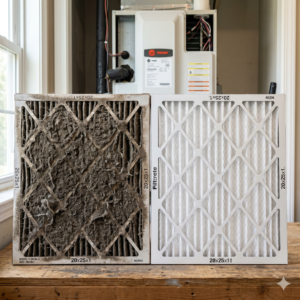
Clogged or low-quality filters are a common source of indoor dust and airflow issues.
Inspect and Seal Duct Leaks
Leaky ducts allow dust from non-conditioned spaces to enter the system.
Clean Vents and Registers
Visible dust around vents often comes from local buildup rather than deep duct contamination.
Address Moisture Issues
Fixing condensation or drainage problems prevents mold growth more effectively than cleaning alone.
When Professional Duct Cleaning Makes Sense
Duct cleaning makes sense when there is a specific, verifiable reason tied to hygiene, performance, or contamination. In these cases, a structured professional approach, such as outlined in AC duct cleaning services, focuses on inspection, proper equipment, and controlled cleaning rather than blanket promises.
Neutral Verdict: When to Clean and When to Skip It
Looking at duct cleaning pros and cons objectively, the verdict is balanced. Duct cleaning is not a routine necessity for every home, and authority skepticism is valid when no real issue exists. However, in specific situations—post-renovation debris, pest contamination, visible mold, airflow restriction, or efficiency support after corrective work—duct cleaning can be justified and beneficial.
The best value comes from understanding your system’s condition, avoiding fear-based decisions, and choosing solutions that address root causes. When duct cleaning is necessary, it should be done professionally and as part of a broader maintenance strategy. When it is not necessary, other actions often deliver better results at lower cost.