




When people search for an ac maintenance list, they are usually not looking for theory—they want clarity. They want to know what should be checked, what can be done safely by a homeowner, what must be handled by a professional, and how maintenance actually prevents high bills, bad air, and breakdowns during peak summer heat. In hot climates like the UAE, AC maintenance is not optional; it is the difference between stable comfort and sudden failure when cooling is needed most. The comprehensive checklist below is structured by task category and skill level, clearly separating low-risk DIY checks from professional-only inspections, adding seasonal guidance for pre-summer preparation and off-season care, explaining safety boundaries around electricity and refrigerants, and showing the real cost of neglect using simple “tell the price” logic—all with the goal of prevention, efficiency, lower energy bills, and avoiding emergency repairs.
Table of Contents
ToggleAC Maintenance List by Task Category and Skill Level
1. Airflow and Filtration (DIY-Friendly Core Tasks)
Airflow is the foundation of AC performance. When airflow is restricted, cooling drops, energy use increases, and internal components work harder than designed.
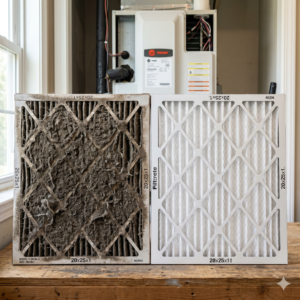
- Check and clean air filters – This is the most important and safest DIY task. Dirty filters reduce airflow and force the system to run longer. Clean or replace filters every 2–4 weeks during heavy use.
- Inspect return air grilles – Make sure furniture, curtains, or dust buildup are not blocking return vents.
- Check supply vents for balanced airflow – Uneven airflow between rooms can indicate early duct or blower issues.
- Listen for airflow noise changes – Whistling or weak airflow sounds can signal blockage or filter overload.
Tell the price: Ignoring filters can increase electricity consumption by 10–25% and lead to coil contamination, which later requires professional cleaning instead of a simple DIY fix.
2. Drainage and Condensate Management (DIY Checks with Clear Stop Signs)
Water management is a silent failure point in many AC systems. Drain issues often start small and become visible only after damage occurs.
- Check for visible water leaks around the indoor unit or ceiling area.
- Inspect drain line outlet to confirm water is flowing during operation.
- Look for musty smells which may indicate standing water or microbial growth.
Stop DIY and call a technician if: water keeps returning after basic cleaning, ceilings show stains, or you notice ice forming on pipes or coils.
Tell the price: A neglected drain blockage can damage walls or ceilings and turn a minor maintenance issue into structural repair costs plus AC downtime.
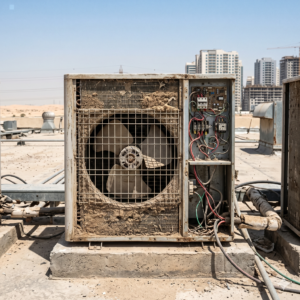
3. Outdoor Condenser Cleanliness and Clearance (DIY with Physical Safety Awareness)
The outdoor unit releases heat. If it cannot breathe, cooling efficiency drops significantly.
- Clear debris around the condenser – Maintain at least 60–90 cm clearance.
- Remove leaves, dust, and sand from visible fins using soft brushing (no pressure washing).
- Check for unusual vibration or rattling during operation.
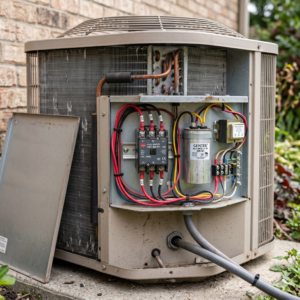
Safety boundary: Do not open electrical panels or attempt coil washing with water pressure. Electricity and delicate fins create risk.
Tell the price: Restricted condenser airflow can raise power consumption and shorten compressor life, leading to the most expensive AC repair category.
4. System Controls and Thermostat Checks (DIY Observation, Not Calibration)
Control issues often masquerade as cooling problems.
- Verify thermostat accuracy by comparing room temperature feel with setting behavior.
- Check response delay between temperature change and AC reaction.
- Confirm schedule settings to avoid unnecessary run time.
Stop DIY if: the AC turns on and off rapidly, ignores thermostat input, or displays error codes.
Tell the price: Poor control accuracy can cause constant cycling, increasing wear and electricity cost without improving comfort.
5. Electrical Components and Safety (Professional-Only)
Electrical inspection is not DIY territory. Even minor mistakes can damage components or create safety hazards.
- Control board (PCB) inspection
- Wiring integrity and connection tightening
- Capacitor and relay checks
- Voltage and current balance testing
Why professional only: These tasks involve live electricity and diagnostic tools. Incorrect handling can escalate damage instantly.
Tell the price: Skipping electrical inspection often leads to sudden system shutdowns during peak heat—when repair demand and downtime are highest.
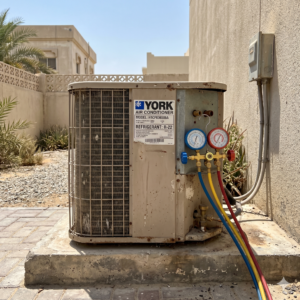
6. Refrigerant and Pressure Management (Professional-Only, No Exceptions)
Refrigerant does not “run out.” If levels are low, there is a leak or system issue.
- Refrigerant pressure measurement
- Leak detection and sealing
- Correct gas type verification
- System performance balancing
Safety boundary: Never attempt refrigerant handling. This involves pressure systems, environmental regulations, and health risk.
Tell the price: Repeated refills without fixing leaks increase long-term repair cost and can permanently damage the compressor.
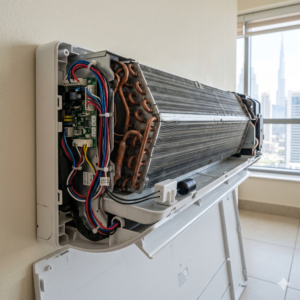
7. Internal Coil and Blower Hygiene (Mixed: Visual DIY, Cleaning by Professionals)
Internal cleanliness affects both cooling and air quality.
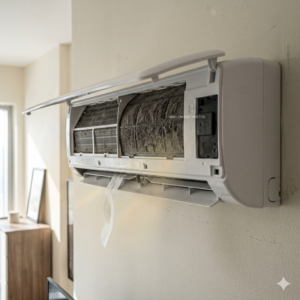
- DIY: Visual inspection for dust buildup or mold smell.
- Professional: Evaporator coil cleaning, blower wheel cleaning, and internal sanitisation.
Tell the price: Dirty coils force the system to work harder, increasing bills and reducing cooling capacity while degrading indoor air quality.
Seasonal AC Maintenance Checklist
Pre-Summer Checklist (Critical)
- Filter replacement or deep cleaning
- Drain line inspection
- Outdoor condenser clearance and cleaning
- Professional performance check (electrical + refrigerant)
Tell the price: Skipping pre-summer checks increases the chance of failure during the hottest months, when emergency repair costs and waiting times are highest.
Off-Season or Low-Use Care
- Clean filters before storage or reduced use
- Inspect for moisture or mold smell
- Clear outdoor unit debris after sandstorms
- Schedule professional inspection if issues appeared during peak season
Clear Red-Flag Symptoms: Stop DIY and Call a Technician
- AC blows warm air despite running continuously
- Repeated water leakage or ceiling stains
- Electrical smell, burning odor, or tripping breakers
- Ice forming on indoor or outdoor pipes
- Sudden spike in electricity bills with no usage change
These symptoms indicate risks beyond safe homeowner action and require professional diagnosis.
Maintenance Frequency Guidance (Simple and Practical)
- Filters: every 2–4 weeks during heavy use
- Drain check: monthly visual inspection
- Outdoor unit: monthly clearance check
- Professional inspection: at least once per year, ideally before summer
Why This AC Maintenance List Focuses on Prevention
The real value of an AC maintenance list is not ticking boxes—it is avoiding stress, high bills, and emergency failures. Preventive maintenance keeps airflow efficient, protects expensive components, maintains healthy indoor air, and ensures stable performance when cooling demand is highest.
When maintenance is ignored, the cost is paid later in larger repairs, higher energy use, and discomfort. When maintenance is done correctly, the system runs quieter, cools faster, consumes less electricity, and lasts longer.
Conclusion
A complete ac maintenance list should give you confidence, not confusion. By separating DIY-safe checks from professional-only tasks, understanding seasonal priorities, respecting safety boundaries around electricity and refrigerants, and recognizing red-flag symptoms early, you take control of your AC system instead of reacting to breakdowns. The logic is simple: small, regular actions prevent large, expensive problems.
In climates where AC is essential, maintenance is not an extra cost—it is protection. It protects your comfort, your air quality, your electricity bill, and your peace of mind. Treat this checklist as a living guide: review it before summer, revisit it during peak use, and let it help you avoid the frustration of emergency repairs when you need cooling the most.