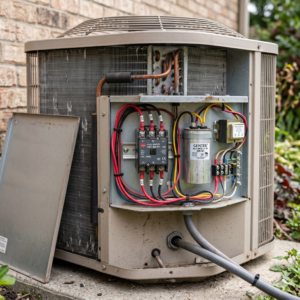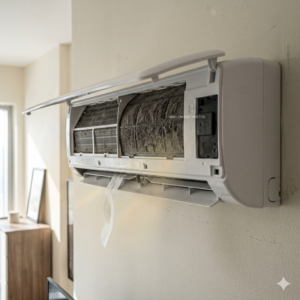





Chiller AC maintenance is not only a technical requirement but a business-critical activity, especially in hot climates where cooling systems operate under constant stress. Whether you are dealing with an urgent performance drop, planning routine preventive care, or managing operating costs at a facility level, understanding how chillers work and how maintenance impacts efficiency, reliability, and downtime is essential. This guide is written to address real operational pain points—from sudden alarms and poor cooling to long-term energy waste and audit pressure—using clear explanations, practical checklists, and modern maintenance perspectives.
Table of Contents
ToggleWhy Chiller AC Maintenance Is a Business-Critical Task
Chillers are often the backbone of cooling systems in commercial buildings, industrial facilities, data centers, hospitals, and large residential complexes. When a chiller underperforms or fails, the impact is immediate and costly. Comfort levels drop, production processes may be interrupted, sensitive equipment can overheat, and energy consumption often spikes without obvious warning.
Unlike smaller split or packaged AC units, chiller systems are complex and interconnected. A minor issue—such as fouling on a heat exchanger or air trapped in the refrigerant circuit—can quietly reduce efficiency long before a full failure occurs. This is why chiller AC maintenance must be approached as a structured, ongoing process rather than a reactive fix after something breaks.
For managers and facility owners, the challenge is balancing three competing goals: maintaining reliable cooling, controlling operating costs, and minimizing downtime risk. Proper maintenance is the only approach that supports all three.
Understanding Core Chiller Performance Concepts
What Is Approach Temperature and Why It Matters
One of the most important yet often misunderstood performance indicators in chiller systems is approach temperature. In simple terms, approach temperature is the difference between the temperature of the chilled medium (water or air) leaving the evaporator and the refrigerant saturation temperature inside the chiller.
Why does this matter? Because approach temperature directly reflects how efficiently heat is being transferred. A low and stable approach temperature usually indicates clean heat-transfer surfaces and good refrigerant performance. A rising approach temperature is often an early warning sign of fouling, scaling, oil contamination, or flow issues.
From an operational perspective, an increased approach temperature forces the chiller to work harder to achieve the same cooling output. This leads to higher energy consumption, increased mechanical stress, and reduced system lifespan. Monitoring approach temperature is therefore one of the most effective ways to catch problems early—before they trigger alarms or downtime.
Urgent Troubleshooting Needs in Chiller AC Maintenance
Not all chiller issues develop slowly. Some problems demand immediate attention to prevent damage or operational disruption.
Common Urgent Symptoms
- Sudden loss of cooling capacity
- High condenser pressure alarms
- Frequent compressor cycling or trips
- Abnormal noise or vibration
- Unexpected spikes in power consumption
When these symptoms appear, the priority is stabilizing the system while identifying the root cause. Quick resets without diagnosis may restore operation temporarily but often mask underlying issues that return under load.
Fast Diagnostic Priorities
In urgent situations, experienced technicians typically focus on a short list of checks:
- Heat rejection performance (airflow or water flow)
- Refrigerant pressures and temperature relationships
- Presence of non-condensable gases
- Control sensor accuracy
These checks help determine whether the issue is mechanical, thermal, or control-related, allowing corrective action without unnecessary shutdowns.
Routine Preventive Planning for Chiller Systems
Preventive maintenance is where most long-term savings and reliability gains come from. Instead of reacting to failures, preventive planning spreads maintenance effort across predictable intervals.
Daily Monitoring Tasks
Daily monitoring does not require deep mechanical intervention, but it plays a crucial role in early detection.
- Record inlet and outlet temperatures
- Observe operating pressures
- Check for abnormal noise or vibration
- Verify control readings against expected values
These simple observations create a performance baseline. Deviations from normal patterns often signal developing problems.
Periodic Inspection Tasks
Periodic inspections, typically performed monthly or quarterly, go deeper into system condition.
- Inspect heat exchanger surfaces for fouling
- Check refrigerant charge indicators
- Verify valve operation and actuator response
- Inspect electrical connections and control panels
This level of maintenance targets wear-and-tear issues that do not trigger alarms but steadily degrade efficiency.
Annual In-Depth Servicing
Annual servicing is where comprehensive system health is restored.
- Thorough cleaning of evaporator and condenser surfaces
- Refrigerant analysis and moisture testing
- Calibration of sensors and controls
- Performance testing under full load
Skipping annual servicing often results in higher energy bills and unexpected failures during peak demand periods.
Focused Troubleshooting of Common Chiller Failure Causes
Heat-Transfer Fouling
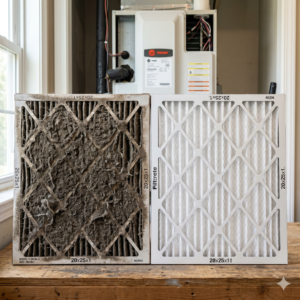
Fouling occurs when dirt, scale, biological growth, or oil films accumulate on heat exchanger surfaces. Even a thin fouling layer can significantly reduce heat transfer efficiency.
Operational signs include rising approach temperature, higher compressor load, and reduced cooling capacity. Regular cleaning and water treatment are the primary defenses against fouling.
Refrigerant Charge Issues
Incorrect refrigerant charge—either too low or too high—affects system stability and efficiency. Low charge often leads to poor cooling and compressor overheating, while overcharge can raise discharge pressures and stress components.
Charge issues should always be addressed through proper measurement and leak testing, not guesswork.
Non-Condensable Contamination
Non-condensable gases, such as air, can enter the system during maintenance or through leaks. These gases reduce condenser efficiency and increase operating pressure.
Symptoms include high head pressure and inconsistent temperature control. Purging and proper evacuation during service are essential to prevent this issue.
Air-Cooled vs Water-Cooled Chiller Maintenance
Air-Cooled Chillers
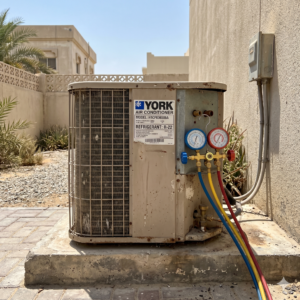
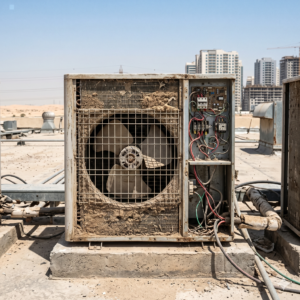
Air-cooled chillers rely on ambient air for heat rejection. Maintenance priorities include keeping condenser coils clean and ensuring unobstructed airflow.
They are generally easier to maintain but more sensitive to outdoor temperature and dust accumulation.
Water-Cooled Chillers
Water-cooled chillers depend on cooling towers and water circuits. Maintenance is more involved due to water chemistry management, scaling risk, and biological growth.
However, when maintained properly, water-cooled systems often achieve higher efficiency and stability.
Business and Compliance Considerations
From a management perspective, chiller AC maintenance is not just a technical task—it is a financial and compliance issue.
Energy Impact
Poorly maintained chillers consume more energy to deliver the same cooling output. Over time, energy waste can exceed the cost of proper maintenance.
Downtime Risk
Unplanned chiller downtime can halt operations, disrupt occupants, and damage business reputation. Preventive maintenance reduces the likelihood of emergency shutdowns.
Contract Value and Audit Readiness
Well-documented maintenance supports warranty claims, regulatory audits, and sustainability reporting. Maintenance records demonstrate responsible asset management and operational control.
Cost Perspective Without Fixed Figures
Chiller maintenance costs vary widely based on system size, type, and condition. Routine maintenance generally represents a small fraction of the cost associated with emergency repairs, energy waste, or premature equipment replacement. The key is not minimizing maintenance spend, but optimizing it to avoid much larger downstream losses.
For organizations managing multiple assets, structured maintenance agreements—such as professional AC maintenance and AMC services—are often used to stabilize costs, ensure compliance, and secure priority support.
Modern Maintenance Context: Smart and Predictive Practices
Contemporary chiller systems increasingly integrate sensors, data logging, and analytics. These tools shift maintenance from reactive to predictive.
Sensor-Based Monitoring
Modern chillers track temperatures, pressures, flow rates, and power consumption in real time. Deviations from expected trends can trigger alerts before failure occurs.
Data Logging and Trend Analysis
Historical data allows technicians and managers to see gradual performance drift, such as slowly increasing approach temperature or declining efficiency.
Predictive Maintenance
By combining sensor data with operational history, predictive maintenance schedules service only when indicators show degradation. This reduces unnecessary interventions while preventing failures.
When Professional Chiller AC Maintenance Becomes Essential
While basic monitoring can be done in-house, professional involvement becomes essential when system complexity, compliance requirements, or performance targets increase. Certified technicians bring diagnostic tools, experience across multiple systems, and structured procedures that reduce risk.
Chiller AC maintenance handled properly improves reliability, supports energy efficiency goals, and protects long-term asset value.
Conclusion
Chiller AC maintenance is not a single task but a layered strategy that combines daily awareness, periodic inspections, and annual in-depth servicing. Understanding core performance concepts such as approach temperature helps detect problems early, while structured checklists ensure nothing critical is overlooked. Addressing common failure causes—like fouling, refrigerant issues, and non-condensables—prevents efficiency loss and downtime.
From a business perspective, effective maintenance supports energy control, operational continuity, and audit readiness. With modern sensor-based monitoring and predictive practices, maintenance can be proactive rather than reactive. In environments where cooling is mission-critical, investing in structured chiller AC maintenance is not an expense—it is a safeguard for performance, reliability, and long-term cost control.