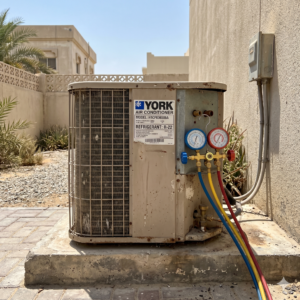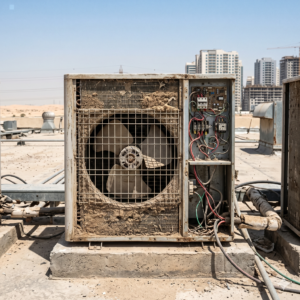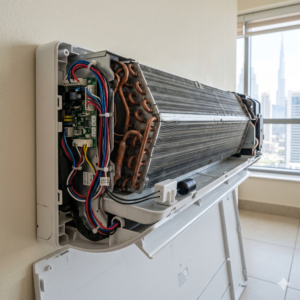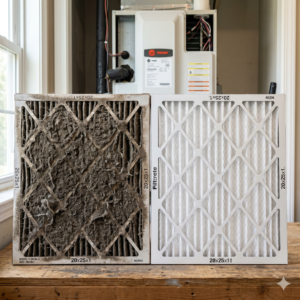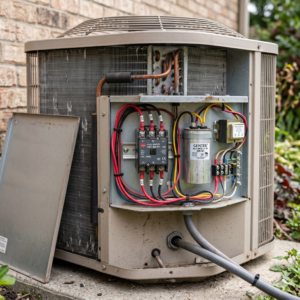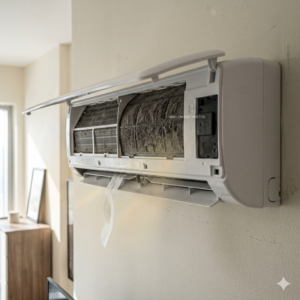





A refrigerant leak test is one of the most critical steps in diagnosing AC cooling problems, especially when an air conditioner blows warm air, loses cooling power over time, or repeatedly needs refrigerant refills. In hot climates like the UAE, refrigerant leaks are not only a performance issue but also a safety, cost, and environmental concern. This article explains, in clear and practical language, how refrigerant leak testing works, the most common testing methods, what results to look for, where leaks usually occur, and when DIY testing reaches its limits and licensed HVAC professionals are required.
Table of Contents
ToggleWhat a Refrigerant Leak Test Actually Does
Before discussing methods, it is important to understand what a refrigerant leak test is meant to achieve. Refrigerant does not get “used up” during normal AC operation. If cooling performance drops because refrigerant pressure is low, it almost always means there is a leak somewhere in the system.
A refrigerant leak test aims to:
- Confirm whether a leak exists
- Identify the approximate or exact leak location
- Determine the severity of the leak
- Prevent repeated gas refills that waste money
Without proper leak testing, topping up refrigerant becomes a temporary fix. The system may cool again for a short time, but the refrigerant will escape, the pressure will drop, and the problem will return.
Common Signs That a Refrigerant Leak Test Is Needed
Many AC owners delay leak testing because the symptoms appear gradually. Common warning signs include:
- AC cooling weakly even though it runs continuously
- Cooling improves briefly after refrigerant refill but drops again
- Ice forming on the evaporator coil or refrigerant lines
- Hissing or bubbling sounds near the indoor or outdoor unit
- Higher electricity bills due to longer run times
These symptoms often push people to search for quick fixes. However, without a proper refrigerant leak test, repairs remain incomplete.
Soap Bubble Test: The Simplest Leak Detection Method
The soap bubble test is one of the oldest and simplest refrigerant leak testing methods. It relies on visual confirmation of escaping gas.
How the Soap Bubble Test Is Performed
A soap solution or commercial bubble solution is applied to suspected leak points such as joints, valves, and fittings. If refrigerant is leaking, bubbles will form at the leak site.
Typical steps include:
- Mixing soap and water or using a leak-detection spray
- Applying the solution to fittings and connections
- Watching for steady bubble formation
What Results to Look For
Small bubbles that grow or continuously form indicate an active leak. No bubbles usually mean either no leak or a leak too small to detect visually.
Pros and Limitations of the Soap Bubble Test
Pros:
- Low cost and easy to perform
- Useful for obvious leaks at accessible joints
Limitations:
- Cannot detect very small or hidden leaks
- Only works where fittings are visible and accessible
- Not suitable for internal coil leaks
For DIY users, this method is limited to basic checks. It does not replace professional testing.
Electronic Leak Detectors: Sensitive but Skill-Dependent
Electronic leak detectors are handheld devices designed to sense refrigerant gases in the air. They are commonly used by HVAC technicians.
How Electronic Leak Detectors Work
The detector is slowly passed around suspected leak areas. When refrigerant is detected, the device alerts the user through sound or visual signals.
What Results to Look For
A consistent alarm response in a specific area usually indicates a leak. False alarms can occur if the detector is used incorrectly or if other chemicals are present.
Pros and Limitations of Electronic Detectors
Pros:
- High sensitivity for small leaks
- Can detect leaks in less visible areas
Limitations:
- Requires experience to avoid false readings
- Higher upfront tool cost
- Not always precise for pinpointing the exact leak location
Electronic detectors are often effective in professional hands but less reliable for untrained DIY users.
UV Dye Testing: Visual Confirmation Over Time
UV dye testing involves adding a fluorescent dye to the refrigerant system. The dye circulates with the refrigerant and escapes at leak points.
How UV Dye Testing Is Performed
A UV dye is injected into the system, and the AC is run for a period of time. A UV light is then used to inspect components for glowing dye traces.
What Results to Look For
Bright fluorescent residue under UV light indicates the leak location.
Pros and Limitations of UV Dye Testing
Pros:
- Clear visual confirmation of leak points
- Useful for intermittent or slow leaks
Limitations:
- Requires time for dye circulation
- Not ideal for immediate diagnosis
- Dye injection should be done carefully
This method is usually more practical for professional diagnostics rather than quick DIY checks.
Nitrogen Pressure Testing: The Professional Standard
Nitrogen pressure testing is widely considered the most reliable refrigerant leak testing method, especially for confirming system integrity.
How Nitrogen Pressure Testing Is Performed
The refrigerant is safely recovered, and dry nitrogen is introduced into the system at a controlled pressure. The system is monitored for pressure drops or audible leaks.
What Results to Look For
A pressure drop over time indicates a leak. Audible hissing or bubble formation with soap solution confirms the leak location.
Pros and Limitations of Nitrogen Testing
Pros:
- Highly accurate and reliable
- Safe for system components when done correctly
Limitations:
- Requires specialized equipment
- Must be performed by trained technicians
This method is typically used by licensed HVAC professionals during major repairs.
Most Common Refrigerant Leak Locations in AC Systems
Understanding where leaks commonly occur helps narrow testing focus.
- Evaporator coils: corrosion and vibration damage
- Service valves: wear from repeated access
- Schrader valves: faulty cores or caps
- Flare connections: improper tightening or aging
- Condenser coils: environmental exposure
Many of these areas are not easily accessible without tools and experience.
DIY Refrigerant Leak Testing: What You Can and Cannot Do
DIY users can perform limited checks such as visual inspections and soap bubble testing on exposed fittings. However, there are clear limits.
DIY testing is appropriate for:
- Checking visible joints and valves
- Identifying obvious leaks
DIY testing is not suitable for:
- Recovering refrigerant
- Pressurizing systems
- Handling refrigerant legally and safely
Legal and Safety Limits of DIY Refrigerant Leak Testing
In many regions, including the UAE, refrigerant handling is regulated. Venting refrigerant into the atmosphere is illegal and environmentally harmful.
Licensed HVAC technicians are required for:
- Refrigerant recovery
- System pressurization
- Major leak repairs
- Recharging refrigerant after repair
Ignoring these limits can result in safety hazards, fines, or permanent system damage.
Typical Costs for Refrigerant Leak Testing
Costs vary depending on the method and whether DIY or professional services are used.
Approximate cost ranges:
- Soap bubble solution: low cost, DIY
- Electronic leak detector: moderate tool cost
- UV dye kits: moderate cost plus time
- Professional leak testing services: service-based pricing
Professional testing often costs less in the long run by preventing repeated gas refills and unnecessary repairs.
How Leak Testing Connects to Proper AC Repair
A refrigerant leak test is not a standalone solution. It is part of a proper repair process. Once a leak is confirmed, repair must address the root cause before refrigerant is recharged.
Professional AC repair services follow this sequence: diagnose, test, repair, confirm integrity, then recharge safely.
Skipping steps increases the risk of repeat failures.
When to Call Licensed HVAC Professionals
You should involve licensed technicians when:
- Leaks are suspected inside coils
- Refrigerant pressure drops repeatedly
- DIY testing does not locate the leak
- System requires nitrogen testing or refrigerant recovery
Professional AC gas refill and leak repair ensures safety, compliance, and long-term performance.
When Refrigerant Leak Issues Should Be Addressed Properly
Refrigerant leaks do not resolve themselves. If ignored, they can reduce cooling efficiency, increase electricity consumption, strain compressors, and lead to permanent damage. They also affect indoor comfort and air quality. Bio On Air helps identify and resolve refrigerant leaks through structured testing, safe repair procedures, and clear communication. Acting early prevents repeated costs and system failure. You can use the WhatsApp or Call button at the top right of this page to discuss suspected refrigerant leak issues with our team.
Conclusion
A refrigerant leak test is the foundation of proper AC diagnosis. Understanding the different testing methods—from soap bubbles to nitrogen pressure testing—helps you recognize what is possible as a DIY check and where professional expertise is required. Each method has its role, but none should be used as a shortcut to avoid proper repair.
By recognizing common leak locations, understanding the limits of DIY testing, and knowing when licensed HVAC technicians are needed, you protect your AC system from repeated breakdowns and unnecessary costs. In a climate where reliable cooling is essential, proper refrigerant leak testing is not an optional step—it is the difference between a temporary fix and a long-term solution.