




AC efficiency comparison is one of the most important topics for anyone using air conditioning in hot climates like the UAE. Different AC types may look similar on the surface, but their efficiency, energy consumption, cooling behavior, and long-term cost can be very different. This article reviews and explains the most common AC system types, comparing how efficient they really are and which situations they are best suited for.
Table of Contents
ToggleWhy AC Efficiency Comparison Matters in Real Life
Many people only realize efficiency matters after receiving high electricity bills or noticing that their AC runs constantly without delivering stable comfort. AC efficiency is not only about saving money. It directly affects indoor comfort, system lifespan, and even indoor air quality.
An efficient AC system cools faster, maintains stable temperature, and does not need to work at full capacity all the time. An inefficient one may still cool, but it does so by consuming more electricity, cycling frequently, and putting stress on internal components. Over time, this leads to more repairs, higher maintenance costs, and shorter system life.
This is why comparing AC efficiency across different system types is essential before deciding which solution fits your space, usage pattern, and long-term expectations.
Key Factors Used in AC Efficiency Comparison
Before reviewing specific AC types, it helps to understand what “efficiency” actually means in practical terms.
The most common efficiency-related factors include:
- Energy consumption: how much electricity the system uses to deliver cooling.
- Cooling stability: how consistently the AC maintains the set temperature.
- Load adaptability: how well the system adjusts to partial cooling needs.
- Runtime behavior: whether the AC runs smoothly or cycles on and off frequently.
- Maintenance sensitivity: how quickly efficiency drops when maintenance is neglected.
With these factors in mind, we can now compare the most common AC system types used in residential and commercial spaces.
1. Window AC Efficiency Comparison
Window AC units are among the oldest and simplest cooling solutions. They combine all components into a single unit installed through a wall or window opening.
How Window AC Systems Work
A window AC draws warm indoor air, removes heat using refrigerant, and expels the heat outside through the same unit. Because everything is compact, installation is relatively simple.
Efficiency Strengths
- Lower initial cost compared to other systems
- Simple design with fewer components
- Suitable for small, single-room usage
Efficiency Limitations
- Lower energy efficiency for larger spaces
- Limited ability to regulate partial load
- Higher noise levels, which often leads users to lower thermostat excessively
In an ac efficiency comparison, window AC units generally rank lower for long-term efficiency. They are acceptable for small rooms with limited usage but become costly when used extensively.
2. Split AC Efficiency Comparison
Split AC systems are one of the most common choices in apartments and villas. They separate the indoor and outdoor units, improving comfort and noise control.
How Split AC Systems Work
The indoor unit handles air circulation and cooling, while the outdoor unit releases heat. This separation allows for better airflow control and quieter operation.
Efficiency Strengths
- Better cooling efficiency than window AC units
- Lower noise encourages realistic thermostat settings
- More effective air distribution
Efficiency Limitations
- Efficiency depends heavily on correct sizing
- Non-inverter models cycle frequently, reducing efficiency
- Performance drops noticeably when filters and coils are dirty
Split AC systems perform well in efficiency comparisons when properly sized and maintained. However, traditional fixed-speed split units can still waste energy during partial load conditions.
3. Inverter Split AC Efficiency Comparison
Inverter split AC systems are an advanced version of standard split units and are widely promoted for their energy efficiency.
How Inverter AC Systems Improve Efficiency
Unlike fixed-speed compressors that turn on and off repeatedly, inverter systems adjust compressor speed based on cooling demand. This allows continuous operation at lower power once the desired temperature is reached.
Efficiency Strengths
- Significantly lower electricity consumption during steady operation
- More stable indoor temperature
- Reduced mechanical stress and longer component lifespan
Efficiency Limitations
- Higher initial purchase cost
- Sensitive to poor installation quality
- Efficiency drops sharply if coils and filters are neglected
In most ac efficiency comparison scenarios, inverter split systems rank among the most efficient choices for residential use, especially for spaces that require long daily cooling hours.
4. Ducted Split AC Efficiency Comparison
Ducted split AC systems distribute cooled air through a network of ducts, allowing one system to serve multiple rooms.
How Ducted Systems Work
A central indoor unit cools air, which is then delivered through ducts to different rooms via vents. Temperature control is often centralized.
Efficiency Strengths
- Uniform cooling across multiple rooms
- Clean visual appearance with hidden units
- Effective for medium-sized villas and offices
Efficiency Limitations
- Efficiency heavily depends on duct design and sealing
- Energy loss through poorly insulated ducts
- Less flexible temperature control without zoning
In an ac efficiency comparison, ducted systems can be efficient or inefficient depending on duct condition. Poor duct maintenance significantly reduces real-world efficiency.
5. VRF and VRV System Efficiency Comparison
Variable Refrigerant Flow (VRF) or Variable Refrigerant Volume (VRV) systems are commonly used in commercial buildings and large residential properties.
How VRF Systems Achieve High Efficiency
VRF systems precisely control refrigerant flow to multiple indoor units, allowing each zone to receive only the cooling it needs.
Efficiency Strengths
- Excellent part-load efficiency
- Highly precise temperature control per zone
- Lower energy waste in large buildings
Efficiency Limitations
- Very high installation cost
- Requires expert design and installation
- Maintenance must be handled by trained professionals
From an ac efficiency comparison perspective, VRF systems are among the most efficient options for large-scale applications, but they are not cost-effective for small homes.
6. Central AC System Efficiency Comparison
Central AC systems are often used in older villas, offices, and large buildings.
How Central AC Systems Work
A single central unit cools air that is distributed through extensive duct networks. Cooling is usually controlled from one main thermostat.
Efficiency Strengths
- Capable of cooling very large spaces
- Simple control structure
Efficiency Limitations
- High energy consumption
- Limited zoning control
- Large energy losses if ducts are inefficient
In modern ac efficiency comparison discussions, traditional central AC systems often rank lower due to energy waste and limited adaptability.
Efficiency Comparison Summary Table
| AC Type | Energy Efficiency | Best Use Case |
|---|---|---|
| Window AC | Low | Small single rooms |
| Split AC | Moderate | Apartments and bedrooms |
| Inverter Split AC | High | Long daily usage |
| Ducted Split AC | Variable | Multiple rooms with good ducts |
| VRF / VRV | Very High | Large villas and commercial spaces |
| Central AC | Low to Moderate | Large buildings with simple control needs |
How Usage Behavior Affects AC Efficiency More Than System Type
Even the most efficient AC system can perform poorly if used incorrectly. Common efficiency killers include setting extremely low temperatures, running AC with open windows, and ignoring maintenance.
Proper usage habits such as realistic thermostat settings, timely filter cleaning, and early repair of minor issues often deliver greater efficiency gains than upgrading hardware alone.
When Efficiency Drops, Repair and Maintenance Matter
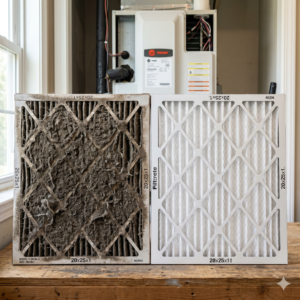
Many efficiency complaints are not caused by poor system choice but by neglected maintenance. Dirty coils, clogged filters, leaking refrigerant, and airflow restrictions force AC systems to work harder.
Addressing these issues early through proper inspection and repair helps restore efficiency and prevent permanent damage.
Conclusion
An ac efficiency comparison shows that no single system is perfect for every situation. Efficiency depends on system type, installation quality, maintenance, and how the AC is used daily. Window and traditional central systems may suit limited needs but often fall short in long-term efficiency. Inverter split and VRF systems deliver superior efficiency when properly installed and maintained.
The most effective approach is choosing a system that matches your space and usage pattern, then protecting that efficiency through regular maintenance and timely repair. In climates where AC runs for much of the year, understanding efficiency differences helps reduce costs, improve comfort, and extend system lifespan.