




What is good AC temperature is one of the most common questions people ask, yet it is also one of the most misunderstood. Many users assume colder is always better, while others worry that using AC too often will harm their health or increase electricity bills. In reality, the “right” AC temperature is not about comfort alone. It directly affects indoor air quality, energy consumption, sleep quality, productivity, and even how long your AC system will last. This guide explains clearly and practically what temperature range is considered good, why it works, and how to adjust it based on real-life situations.
Table of Contents
ToggleThe Short Answer: What Is a Good AC Temperature?
If you are looking for a clear and direct answer, here it is:
- The generally recommended AC temperature is between 23°C and 26°C (73°F–79°F).
This range is widely accepted by HVAC professionals, energy experts, and health organizations because it balances comfort, efficiency, and indoor air quality. Temperatures lower than this range often feel refreshing at first but can cause discomfort, dryness, higher energy use, and unnecessary strain on the AC system.
Why 23°C–26°C Is Considered the Ideal Range
The idea of a “good” AC temperature comes from how the human body regulates heat and how cooling systems are designed to operate efficiently.
At temperatures between 23°C and 26°C:
- The body can cool itself naturally without sudden temperature shock.
- Humidity levels stay more stable, reducing dryness and irritation.
- The AC does not need to run continuously at maximum capacity.
- Indoor air circulation remains balanced.
When AC temperature is set too low, the system cycles aggressively, moisture removal becomes uneven, and air may feel cold but stale. Over time, this can affect both comfort and air quality.
What Happens If You Set the AC Below 22°C?
Many people believe setting the AC to 18°C or 20°C will cool the room faster. In practice, this creates several problems.
Setting the AC too low can lead to:
- Excessive electricity consumption
- Dry skin, dry eyes, and throat irritation
- Cold stress on the body, especially for children and elderly people
- Condensation issues inside the AC unit
- Increased wear on compressors and fan motors
Another common issue is uneven cooling. The room may feel cold near the AC but uncomfortable elsewhere, leading users to adjust settings repeatedly instead of fixing airflow balance.
What Happens If You Set the AC Above 26°C?
While higher temperatures save energy, setting the AC above 26°C may not provide sufficient comfort in hot and humid environments.
When AC temperature is too high:
- Humidity may remain high, making the room feel sticky
- Sleep quality may decrease
- Productivity can drop due to discomfort
- Air circulation may feel weak
This is why 23°C–26°C is considered a balance, not a strict rule. The best temperature depends on how the space is used.
Good AC Temperature for Sleeping
Sleep comfort is one of the most important considerations.
The recommended AC temperature for sleeping is:
- 24°C–26°C
This range supports natural body temperature reduction during sleep without causing excessive cold. Extremely low temperatures can disrupt sleep cycles, cause muscle stiffness, and dry out nasal passages.
Using a fan along with AC at a moderate temperature often improves comfort more than lowering the thermostat.
Good AC Temperature for Living Rooms
Living rooms are used for movement, social activity, and daytime relaxation.
A good AC temperature for living rooms is:
- 23°C–25°C
This range provides cooling without making the space feel too cold when people move in and out of the room.
Good AC Temperature for Offices and Workspaces
Productivity and concentration are sensitive to temperature.
For offices and home workspaces:
- 23°C–24°C is generally ideal
Temperatures below this range can reduce focus and cause discomfort, while higher temperatures may lead to fatigue.
Good AC Temperature for Children and Elderly People
Children and older adults are more sensitive to temperature changes.
A safer and more comfortable range is:
- 24°C–26°C
This helps avoid cold stress, respiratory irritation, and sudden temperature shock when moving between rooms.
How Humidity Changes What Feels “Good”
Temperature alone does not determine comfort. Humidity plays a major role.
Even at 24°C, a room with high humidity can feel uncomfortable. Ideally:
- Indoor humidity should stay between 40%–60%
If humidity is too high, the AC may need maintenance, airflow adjustment, or deeper cleaning to restore proper moisture control.
Energy Efficiency: How Temperature Affects Your Electricity Bill
Every degree you lower the thermostat increases energy consumption.
As a general rule:
- Lowering the AC temperature by 1°C can increase energy use by 5–10%
Setting your AC within the recommended range reduces strain on the system and lowers long-term costs.
Common Myths About AC Temperature
Myth 1: Lower Temperature Cools the Room Faster
AC units cool at a fixed rate. Setting the temperature lower does not speed up cooling; it only makes the system run longer.
Myth 2: Very Cold Air Is Healthier
Excessively cold air can dry out mucous membranes and worsen respiratory discomfort.
Myth 3: Turning AC On and Off Saves More Energy
Frequent on-off cycling often wastes more energy than maintaining a stable moderate temperature.
Signs Your AC Temperature Setting Is Not the Real Problem
If your room feels uncomfortable even at 24°C–25°C, the issue may not be the temperature.
Possible causes include:
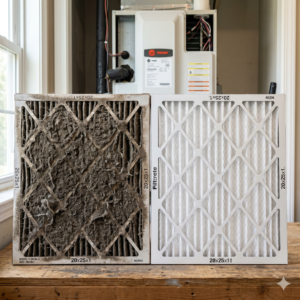
- Dirty filters or coils
- Poor airflow or blocked vents
- Incorrect AC size for the room
- Duct leakage or contamination
- Low refrigerant or system imbalance
In these cases, lowering the temperature only hides the real problem.
How to Set AC Temperature Correctly Step by Step
- Start at 26°C and allow the room to stabilize.
- Adjust gradually by 1°C if needed.
- Observe comfort and humidity, not just temperature.
- Use fans to improve air circulation.
- Avoid frequent drastic changes.
When AC Temperature Alone Is Not Enough
If you constantly adjust the thermostat but never feel comfortable, your AC system may need inspection.
Issues like dust buildup, airflow imbalance, or refrigerant problems affect comfort more than temperature settings.
Why Professional AC Checkups Matter for Comfort
Proper AC performance ensures that the temperature you set actually feels as expected.
Without regular inspection:
- Cooling becomes uneven
- Humidity control weakens
- Energy consumption rises
Professional AC inspection helps ensure that the system delivers consistent comfort at normal temperature settings.
When AC Comfort Issues Should Be Addressed Properly
If your AC feels too cold, too warm, or uncomfortable even within the recommended temperature range, the problem may be deeper than settings alone. Poor airflow, dust accumulation, or system imbalance can reduce indoor air quality and strain the AC over time. Addressing these issues early helps protect comfort, health, and long-term system reliability. If you are unsure whether your AC is operating efficiently, you can use the WhatsApp or Call button at the top right of this page to discuss your situation with our team.
Conclusion
So, what is good AC temperature? For most homes and workplaces, the ideal range is 23°C–26°C. This range supports comfort, energy efficiency, healthy air circulation, and system longevity. Temperatures outside this range often create unnecessary discomfort or higher costs.
Instead of chasing colder settings, focus on balanced comfort. When your AC system is clean, well-maintained, and properly sized, a moderate temperature feels cooler, healthier, and more stable. Understanding this helps you make smarter choices, avoid common mistakes, and enjoy reliable indoor comfort throughout the year.